

TL;DR:
- A structured workflow connects theory, practice, and progress tracking to build real digital marketing skills.
- Preparation with reliable tools, time management, and environment sets learners up for consistent success.
- Industry partnerships and practical projects bridge study with real-world application, boosting employability.
You open your laptop, tab after tab, course after course, and somehow nothing sticks. You've watched hours of tutorials, downloaded every free resource you can find, and still feel no closer to a real career in digital marketing. That frustration is real, and it's more common than you think. The problem isn't your intelligence or your motivation. It's the absence of a structured, repeatable workflow that takes you from raw beginner to job-ready professional. This guide maps out exactly how to build that workflow so your study time actually translates into skills, confidence, and career progress.
Table of Contents
- Understand the importance of a structured workflow
- Prepare: What you need before starting digital marketing training
- Step-by-step digital marketing learning workflow
- Assessment, feedback, and troubleshooting: Ensuring progress
- Collaboration and real-world exposure: Bridging study and career
- A realistic perspective: What actually works for digital marketing learners
- Upgrade your digital marketing training with CTDI
- Frequently asked questions
Key Takeaways
| Point | Details |
|---|---|
| Structured workflow boosts results | A clear, step-by-step workflow leads to stronger skills and faster career growth in digital marketing. |
| Preparation is key | Setting up the right tools, mindset, and schedule unlocks success in online marketing training. |
| Assessment drives improvement | Ongoing feedback and reflection ensure consistent progress and practical skills. |
| Collaboration opens doors | Partnering with peers and industry boosts real-world confidence and employability. |
Understand the importance of a structured workflow
Now that we've set the scene, let's define exactly why a workflow is so important.
A workflow, in the context of learning digital marketing, is a step-by-step plan that sequences your study, applies your knowledge in practical settings, and tracks your progress over time. It isn't just a to-do list. It's a deliberate system that connects what you learn today to what you'll be capable of tomorrow.
Without one, learners fall into predictable traps. They skip foundational theory and jump straight to trendy tactics. They binge on video content without practising what they've absorbed. They mistake feeling busy with actually making progress. The result is a patchwork of disconnected knowledge that doesn't translate into real-world capability.
"A workflow gives your learning purpose and direction. Without it, even the most motivated learner risks spinning their wheels and losing momentum before they reach their goals."
The evidence backs this up. Online education platforms allow flexible study but can lead to poor outcomes without a clear workflow. Flexibility is only an advantage when it operates within a sensible structure.
A solid workflow delivers measurable benefits across every stage of training:
- Improved retention: Sequenced learning reinforces earlier concepts and prevents cognitive overload.
- Greater confidence: Hitting small milestones regularly builds momentum and belief in your own capability.
- Clearer direction: Knowing what comes next removes the paralysis of choice.
- Stronger employability: Structured practice produces portfolio-worthy outputs that employers can actually evaluate.
Understanding the digital marketing learning process as a progressive journey rather than a collection of random topics is the first mental shift every aspiring marketer needs to make. Without it, you're navigating without a map.
Prepare: What you need before starting digital marketing training
With the value of workflow established, let's outline what you need before diving in.
Many learners make the mistake of jumping straight into course content without setting up the conditions for success. Preparation isn't a delay. It's the foundation that determines whether your workflow holds up over weeks and months of study.
Technology requirements
You don't need a cutting-edge machine, but you do need a reliable one. A reasonably modern computer with a stable internet connection is non-negotiable. Beyond hardware, you'll want access to essential tools including Google Analytics, a social media scheduling platform, a basic content creation suite such as Canva, and a spreadsheet programme for campaign data tracking. Many of these are free or low-cost, making digital marketing one of the most accessible fields to study online.
Time management as a non-negotiable
Without a physical classroom keeping you accountable, time management becomes your most critical skill before any marketing knowledge. Choosing between online, hybrid, or blended learning platforms can significantly influence your workflow structure and how you allocate your study hours. Be honest with yourself about when you're sharpest. If you're a morning person, block those hours for deep study work. Evening learners should protect that time fiercely from social commitments and distractions.
Creating a distraction-free study environment
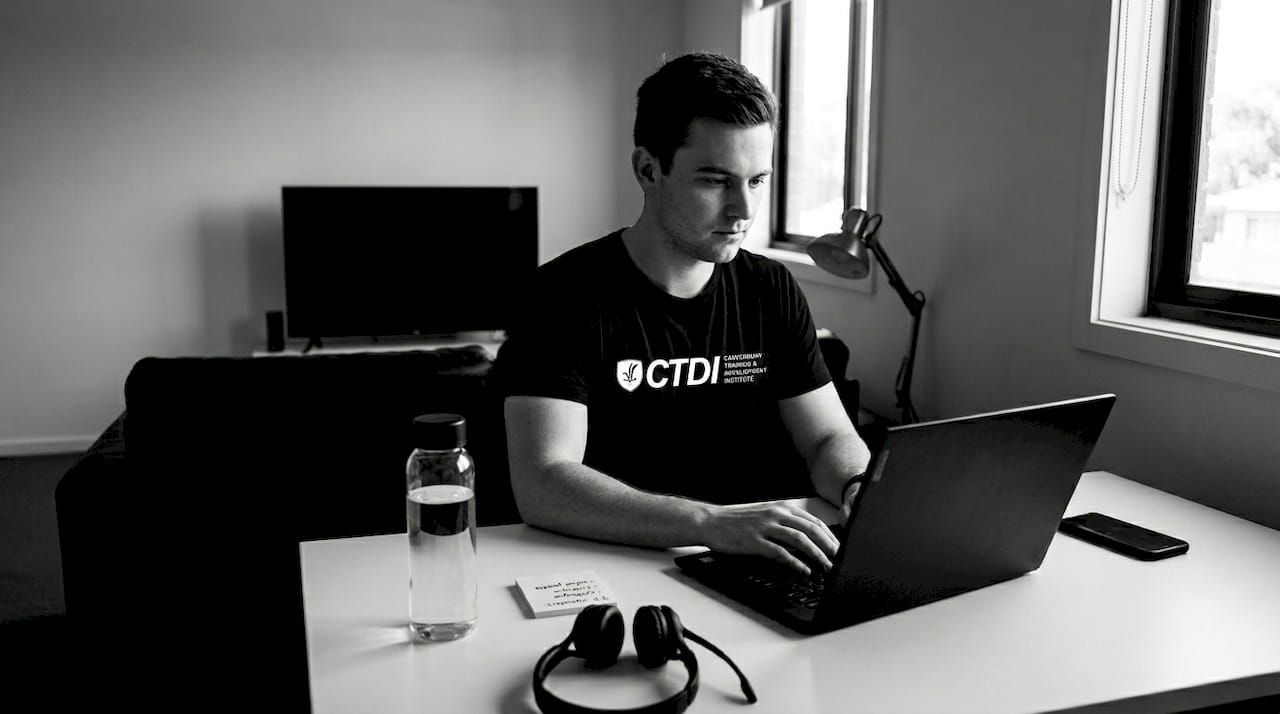
Physical environment shapes cognitive performance. A dedicated study space, even if it's a corner of your living room, signals to your brain that it's time to focus. Silence your phone notifications, use website blockers during study sessions if needed, and communicate your study schedule to those around you so interruptions are minimised.
Here's a quick comparison of what prepared versus unprepared learners typically experience:
| Factor | Prepared learner | Unprepared learner |
|---|---|---|
| Study consistency | High, follows a set timetable | Low, studies when mood allows |
| Tool readiness | Tools installed and familiar before starting | Scrambles to set up tools mid-module |
| Environment | Dedicated, distraction-free space | Studies from anywhere, often interrupted |
| Progress tracking | Uses weekly check-ins and milestones | Rarely measures progress formally |
| Completion rate | Significantly higher | Higher risk of abandoning course |
Selecting the right course structure
Not all digital marketing courses are built the same. Self-paced programmes suit independent learners who already have strong self-discipline. Guided online programmes with structured deadlines, tutor check-ins, and peer interaction suit most learners far better because accountability is built in. When enrolling in online courses, compare how each programme sequences its content, what practical components are included, and what support mechanisms are available.
Pro Tip: Before you enrol in any course, build your weekly study timetable first. Block specific times for study, practice, and review. Treat those blocks the same way you'd treat a work commitment. Learners who do this are significantly more likely to complete their qualification and apply their skills effectively.
Step-by-step digital marketing learning workflow
Armed with the right tools and mindset, it's time to walk through the workflow step by step.
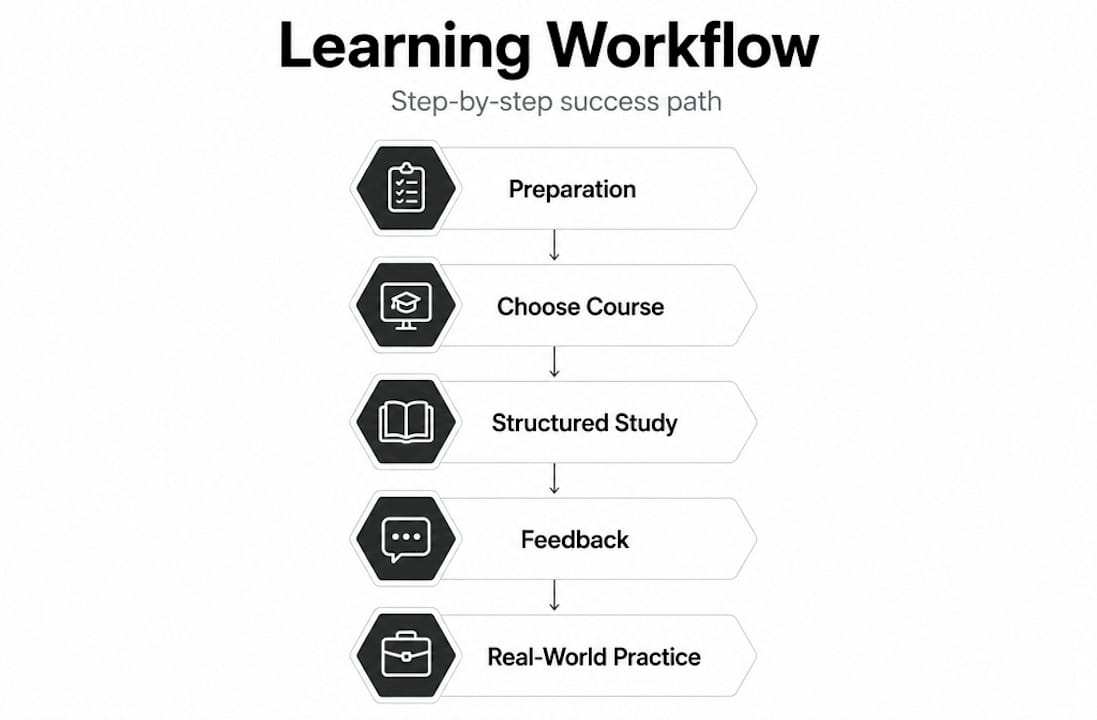
The most effective digital marketing learners don't just consume content randomly. They follow a deliberate sequence that mirrors how skills actually build on one another. Structured digital marketing training, when sequenced correctly, accelerates both skill development and confidence.
Here's the workflow that consistently produces the best results:
-
Define your outcome goals. Before opening a single module, write down what you want to be able to do at the end of your training. Goals like "manage a Google Ads campaign independently" or "produce a monthly analytics report" are far more motivating and measurable than vague ambitions like "understand digital marketing."
-
Complete foundational theory first. Resist the urge to jump to advanced tactics. Foundational modules covering consumer behaviour, the marketing funnel, SEO principles, and content strategy form the scaffolding everything else hangs on.
-
Apply theory immediately through practical tasks. For every concept you study, practise it within 48 hours. If you've just learned about keyword research, spend an hour actually doing keyword research for a hypothetical business. Active application locks in learning far more effectively than passive review.
-
Seek feedback before moving on. Submit your practical work to tutors or peers and genuinely engage with the feedback you receive. Don't skip this step. Feedback catches bad habits before they become deeply ingrained.
-
Reflect and document your learning. At the end of each study week, write a short paragraph about what you've learned, what confused you, and what you want to revisit. This habit builds metacognitive awareness, which is the ability to understand and manage your own learning process.
-
Move to advanced modules with confidence. Once you've demonstrated competency in foundational areas, exploring advanced digital marketing pathways becomes a natural next step rather than an intimidating leap.
-
Build a portfolio of real work as you go. Every practical task you complete is potential portfolio content. Document your campaigns, your analytics findings, and your strategic thinking from day one.
Self-study vs. guided online programmes: a comparison
| Feature | Self-study | Guided online programme |
|---|---|---|
| Flexibility | Very high | Moderate to high |
| Structure | Learner-dependent | Built in |
| Feedback quality | Limited (relies on forums) | Expert and peer feedback |
| Accountability | Low | High |
| Credential outcome | Often none | Nationally recognised qualification |
| Employability impact | Variable | Consistently stronger |
Pro Tip: When you receive a large module, break it into smaller weekly objectives before you begin. For example, if a module covers social media marketing, split it into week one for platform strategy, week two for content creation, and week three for analytics. Smaller targets are far easier to hit consistently.
Assessment, feedback, and troubleshooting: Ensuring progress
Once engaged in regular study, the next step is measuring your progress and adjusting efficiently.
Assessment in digital marketing training isn't just about passing. It's the mechanism through which you find out whether you actually understand what you think you understand. Many learners treat assessment as a hurdle rather than a tool. That's a costly mistake.
Regular projects and feedback loops in digital marketing education drive real-world skill growth. The most growth-oriented learners actively seek assessment rather than avoiding it.
Types of assessment to expect and embrace:
- Quizzes and knowledge checks: These measure whether core concepts have landed. Don't rush them. Use incorrect answers as a signal to revisit material.
- Major projects: Simulated campaign briefs, content strategies, and analytics reports give you hands-on experience that mirrors the demands of a real marketing role.
- Peer review exercises: Being assessed by, and assessing, other learners is one of the most underrated learning tools available. It forces you to articulate your thinking and see how others approach the same problems.
- Tutor feedback sessions: These are opportunities, not obligations. Prepare specific questions about areas you're uncertain about rather than passively receiving comments.
Common mistakes that derail progress:
- Procrastination on major projects. Large assessments feel overwhelming so learners avoid starting. Break each project into a first draft stage, a refinement stage, and a final review stage to make it manageable.
- Ignoring peer reviews. Many learners skip giving peer feedback because it feels time-consuming. In fact, explaining concepts to others accelerates your own understanding faster than re-reading notes.
- Not using analytics in your own learning. Digital marketers live and breathe data. Apply that same data-driven mindset to your own study by tracking completion rates, assessment scores, and time-on-task each week.
Accessing your student portal resources regularly keeps you connected to support materials, submission portals, and tutor communication channels, all of which are critical for staying on track.
Pro Tip: Start a weekly learning log. Each Sunday evening, spend ten minutes writing down three things you learned, one area you're uncertain about, and one thing you'll do differently next week. After a month, this log becomes a powerful record of your growth and a guide for adjusting your workflow.
Collaboration and real-world exposure: Bridging study and career
To take your workflow beyond theory, let's look at applying your skills in real-world contexts and through partnership opportunities.
The gap between knowing digital marketing concepts and applying them in a real workplace is where many graduates stumble. The learners who bridge that gap most effectively are those who deliberately seek collaborative and real-world experiences during their training, not after it.
What project-based learning actually looks like:
Project-based learning places you in scenarios that mirror real marketing roles. You might be asked to develop a social media strategy for a hypothetical retail brand, run a simulated Google Ads campaign with a defined budget, or analyse a dataset and present findings to a panel. These experiences aren't just academic exercises. They're dress rehearsals for your career.
Collaboration amplifies this effect significantly. Working alongside peers on joint projects teaches you how to manage creative differences, divide responsibilities, meet shared deadlines, and communicate clearly, all skills that employers consistently identify as critical for marketing professionals.
"Real-world project integration doesn't just make training more engaging. It fundamentally changes what learners are capable of on day one of employment. The confidence that comes from having actually run a campaign, even a simulated one, is unmistakable."
Industry partnerships enhance digital marketing education through real-world project integration. When training providers connect learners with marketing agencies, employers, and industry bodies, the quality of practical exposure improves dramatically.
Benefits of real-world exposure during training:
- Portfolio development: Every real or simulated project you complete becomes tangible evidence of your capability.
- Professional networking: Interacting with industry partners during training creates connections that frequently lead to internships, references, and job opportunities.
- Confidence in client-facing contexts: Learners who've presented to simulated clients handle real client interactions far more comfortably.
- Understanding of workplace dynamics: Collaborative projects teach you how marketing teams actually function, including workflows, approval processes, and stakeholder communication.
For learners who want to extend their credentials beyond a diploma, exploring academic articulation options can open pathways to bachelor's degrees and further professional recognition, which adds another dimension to your long-term career planning.
A realistic perspective: What actually works for digital marketing learners
Having explored the practical workflow steps, it's time for a candid take on what really drives learning and career impact.
Here's an uncomfortable truth that most training guides won't tell you. Rigid, one-size-fits-all workflows backfire more often than they succeed. The learner who follows a prescribed 12-week plan to the letter while ignoring their own pace, interests, and real-world opportunities is not necessarily ahead of the learner who adapts their approach every few weeks based on what's working.
Personalisation isn't a shortcut. It's a sign of maturity. The best digital marketers we see graduate from structured training are those who understood their workflow as a living document, not a fixed contract. They built the structure, then adjusted it without guilt when life or learning demanded it.
The other insight worth naming directly is this: watching hours of video content feels productive, but it rarely is. Passive consumption of digital marketing tutorials is the training equivalent of reading a recipe without cooking. You might understand the steps, but you cannot taste the outcome. Working on a real or simulated campaign, even an imperfect one, delivers more skill growth in a single afternoon than a week of passive video lectures.
Seeking feedback aggressively is another hallmark of high-achieving learners. The natural instinct is to avoid feedback because it might reveal gaps or mistakes. But gaps and mistakes caught early are correctable. Gaps and mistakes discovered by an employer six months into a job are far more costly.
Staying current with digital marketing career insights and industry developments throughout your training isn't optional either. Digital marketing moves fast. The tools and platforms that dominate today may look very different in twelve months. Learners who build the habit of staying informed during training carry that habit into their careers, which is exactly the kind of professional behaviour that leads to promotion and recognition.
The bottom line is this: structure gives you a starting point, adaptability gives you longevity, and real-world practice gives you a career.
Upgrade your digital marketing training with CTDI
Ready to put your new workflow into practice? Here's how you can get started with a trusted Australian educator.
Canterbury Training and Development Institute (CTDI) offers flexible, 100% online digital marketing qualifications that are nationally recognised and built around exactly the kind of structured, practical workflow we've outlined in this guide. Whether you're starting out or ready to advance, CTDI connects you with industry-experienced trainers, real project-based learning, and dedicated student support so you're never navigating your training alone.
If you're ready to move beyond scattered self-study and into a structured learning pathway that actually builds a career, enrol in an online digital marketing diploma today and take the first real step forward. For learners ready to go further, CTDI's advanced digital marketing qualification delivers the depth and credential recognition that serious career progression demands. Your workflow starts here.
Frequently asked questions
What tools are essential for a digital marketing training workflow?
A reliable computer, strong internet connection, and access to online learning platforms and analytics tools such as Google Analytics are the core essentials for any learner starting out.
How much time do I need to dedicate each week to succeed?
Most learners benefit from at least 6 to 10 hours of structured study time per week to make steady, measurable progress through a digital marketing qualification.
What is the difference between self-paced and guided online digital marketing training?
Self-paced training offers more flexibility but requires greater self-discipline, while guided programmes provide structured timelines, feedback, and community support. Choosing the right learning format can significantly influence your workflow and long-term outcomes.
How important are industry partnerships for digital marketing training?
Industry partnerships expose you to real-world project integration, which increases both job-readiness and the practical confidence employers look for in new graduates.
What are some common mistakes to avoid in my learning workflow?
Procrastination on large projects, avoiding feedback from tutors and peers, and skipping practical assignments are the three most common mistakes that slow learner progress and undermine skill development.
Recommended
- Advanced Diploma Digital Marketing Australia | AI-Powered Marketing Career | CTDI — Canterbury Training and Development Institute
- Mastering the digital marketing learning process: career growth — Canterbury Training and Development Institute
- Career Insights Blog | AI Jobs, Digital Marketing & Green Careers Australia | CTDI — Canterbury Training and Development Institute
- What Will Happen to Digital Marketing Jobs in the Age of AI? | CTDI — Canterbury Training and Development Institute
- Optimise your digital marketing workflow for SaaS growth
- Influencer Marketing Workflow Guide for Strategic Campaigns