

TL;DR:
- Successful remote training requires clear goals, measurable outcomes, and ongoing participation tracking.
- Engaging, interactive, and psychologically safe learning experiences are crucial for remote employee development.
- Building social connection and strong leadership involvement enhances remote training effectiveness and learner engagement.
Remote employee training across Australia has never been more critical or more complicated. About 35% of workers engaged in work-related training in 2023, yet HR managers consistently report that remote delivery introduces friction, disengagement, and measurement gaps that in-person programmes simply do not face at the same scale. The good news is that the solutions are practical, tested, and ready to implement. This article walks you through seven proven strategies for designing, delivering, and sustaining remote corporate training that genuinely lifts skills and drives business outcomes across dispersed Australian teams.
Table of Contents
- Set clear training goals and measure participation
- Design interactive, remote-first learning experiences
- Cultivate psychological safety and social connection
- Compare popular remote training platforms and methods
- Tailor ongoing training for skill gaps and future needs
- Why remote training is more than content delivery: our view
- Boost your team's skills with expert-backed training solutions
- Frequently asked questions
Key Takeaways
| Point | Details |
|---|---|
| Define clear training goals | Set measurable objectives before beginning any corporate training initiative. |
| Prioritise engagement and social connection | Focus on interactive and collaborative formats to counter isolation in remote settings. |
| Benchmark participation and intensity | Comparing your metrics to national standards helps justify resources for ongoing training. |
| Choose tools that fit team needs | Evaluate remote training platforms and methods for best suitability to your workforce. |
| Regularly address skill gaps | Continual skills assessment and upskilling ensure your organisation stays competitive. |
Set clear training goals and measure participation
The most common reason remote training programmes underperform is not a technology failure. It is a goal-setting failure. When learners cannot see a direct line between what they are studying and a real business outcome, motivation drops fast. Before you design a single module or book a virtual facilitator, define exactly what success looks like in measurable terms.
Start by asking three questions. First, what specific behaviour or skill gap does this training address? Second, how will you know the training worked? Third, over what timeframe will you measure progress? Those answers will shape everything from content selection to platform choice to how you report results to the executive team.
Australian employer-sponsored training participation and intensity are currently at decade-highs, which raises the bar considerably. Your workforce is likely more training-aware than it has ever been, and that means benchmarks matter. Use the table below to check where your organisation sits relative to national figures and set informed internal targets.
| Metric | National benchmark (2023) | Example internal target |
|---|---|---|
| Participation rate | 35% of workforce | 50% within 12 months |
| Training hours per 1,000 worked | 8 hours | 12 hours |
| Post-training performance improvement | Varies by sector | 15% uplift in KPI score |
| Completion rate for online modules | Around 60-70% typical | 80% minimum |
Once you have set goals, track participation rates every month, not just at programme end. Reviewing employee training statistics across comparable vocational areas can also reveal where your industry sits and whether your internal targets are ambitious or conservative.
Pro Tip: Deploy a short, five-question survey immediately after each training session and again four weeks later. The first survey captures immediate reaction; the second captures whether learners actually applied what they learned. This two-stage approach gives you far richer data than a single end-of-course rating.
Tracking training hours alone tells you very little. A team that logs 50 hours of passive video watching may produce fewer results than one that spends 20 hours in structured, applied learning. Pair hours with a behavioural indicator, such as reduced error rates, faster onboarding times, or improved customer satisfaction scores, to build a picture that actually persuades senior stakeholders to keep investing.
Design interactive, remote-first learning experiences
Once your goals and measurement framework are solid, the focus shifts to how you build the learning experience itself. Many organisations made a critical mistake during the rapid shift to remote work: they simply took their face-to-face content and uploaded it as slide decks or recorded lectures. That approach consistently produces low engagement and poor retention.
Remote training that works is designed differently from the ground up. It treats the remote format as a genuine opportunity rather than a compromise. Here is what that looks like in practice.
Core design principles for remote-first training:
- Prioritise live, synchronous sessions with structured Q&A built into the agenda, not tacked on at the end
- Break long modules into micro-learning segments of 10 to 15 minutes maximum to suit fragmented work schedules
- Include collaborative assignments that require learners to work together across different locations and time zones
- Use online discussion forums or team channels where learners can ask questions, share insights, and support each other between live sessions
- Rotate facilitators or include guest speakers from real industry roles to introduce variety and external credibility
Remote training should go beyond content delivery to foster social connection and psychological safety, a principle that Queensland's government guidelines reinforce strongly. The social layer of learning, the informal conversations, the peer-to-peer teaching moments, and the shared experience of working through a challenge together, is what transforms training from a compliance exercise into a genuine capability shift.
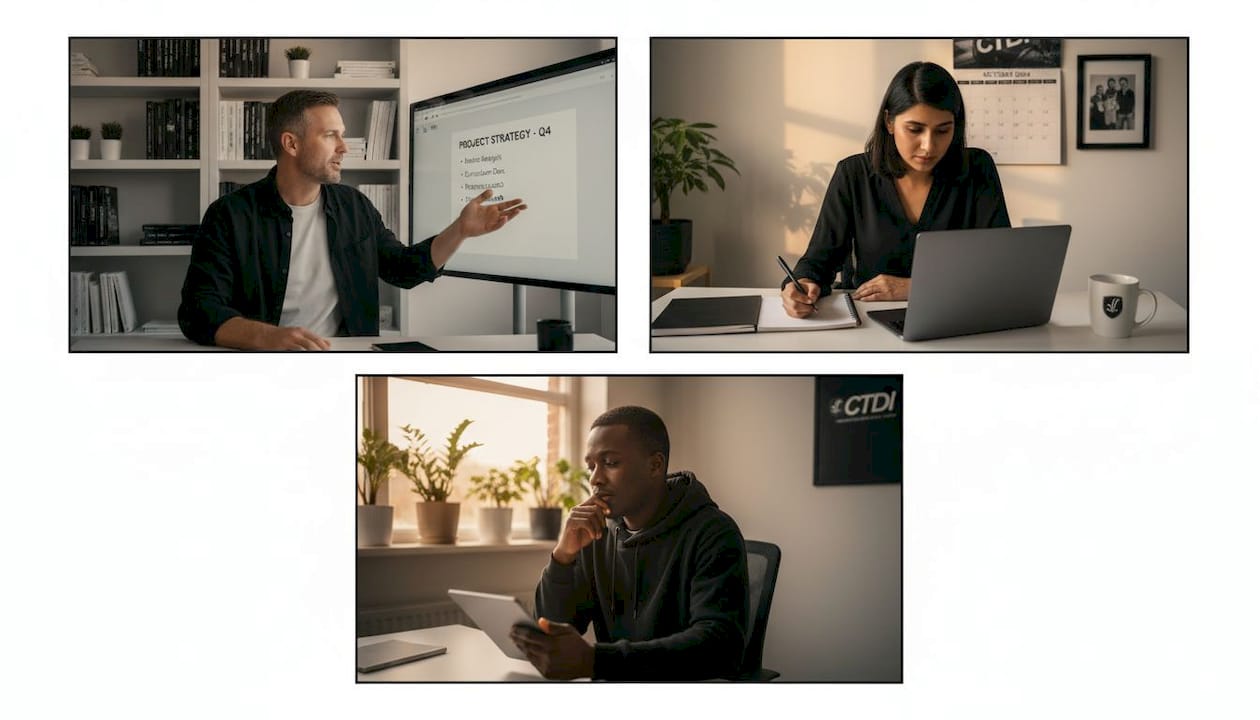
For organisations that want external reinforcement of their internal programmes, exploring corporate training partnerships with registered training organisations can bring nationally accredited content directly into your remote learning ecosystem. Similarly, external training support providers can help facilitate the social and wellbeing dimensions of remote learning that sit outside a typical L&D team's expertise.
Pro Tip: At the start of every training programme, run a short scenario exercise drawn from your specific industry. Ask participants to identify a problem they faced in the last month and connect it to the skills the course will develop. This simple step dramatically increases perceived relevance, and relevance is the single biggest driver of adult learner engagement.
Interactive design also means rethinking how you assess learning. Replace end-of-module multiple-choice tests with scenario-based tasks, peer review activities, or short video reflections where learners demonstrate application. These formats feel more meaningful to participants and give you genuinely useful data on capability development.
Cultivate psychological safety and social connection
This is the section many HR managers overlook because it feels soft. It is not. The data on training outcomes consistently shows that how safe learners feel to ask questions, make mistakes, and share genuine opinions is one of the strongest predictors of whether learning sticks.
In a remote setting, psychological safety does not develop automatically. Without the casual conversations before a workshop starts or the body language cues that signal "this is a safe space," remote learners default to passive consumption. They watch, they listen, and they disappear at the end of the session having learned far less than the training budget intended.
Here are concrete actions HR managers can take right now to build psychological safety into remote training programmes:
- Open every session with a brief, low-stakes social question unrelated to work content, giving every person a moment to speak before the formal content begins
- Have visible leadership participation, specifically senior managers and executives joining training sessions, not just endorsing them via an email
- Create explicit ground rules at the start of each programme covering confidentiality, respectful disagreement, and the right to ask any question without judgement
- Establish a feedback channel, whether an anonymous survey, a dedicated email address, or a team channel, where learners can raise concerns about the programme in real time
- Pair new learners with experienced peers for the duration of the programme through a structured buddy system
"The most effective remote learning environments are those where people feel genuinely safe to be wrong. When that safety is absent, learners perform, they do not actually learn."
Building work-social connection and psychological safety is critical in remote training contexts, and this is not just good practice but an active strategy for reducing the dropout and disengagement rates that cost Australian organisations significant training investment each year.
If you are exploring employer-funded upskilling pathways, ensure the external provider you partner with explicitly addresses how they support learner wellbeing and social connection in their remote delivery model. Not all providers do this well, and it is a question worth asking upfront.
Visible leadership involvement deserves special mention. When a general manager or senior director joins a training session, even briefly, it signals institutional commitment. Learners immediately recalibrate how seriously they take the programme. This is one of the highest-return, lowest-cost actions available to HR teams.
Compare popular remote training platforms and methods
With the right social and psychological foundations in place, you need the right technology to deliver your programme effectively. The Australian market has access to a wide range of platforms, and intense use of online learning platforms is already common due to strong employer support. The challenge is matching the platform to your specific organisational needs.
The table below compares the most common remote training approaches used by Australian HR teams.
| Method | Cost | Scalability | Interaction level | Best suited for |
|---|---|---|---|---|
| Self-paced LMS (e.g., Moodle, TalentLMS) | Low to medium | Very high | Low to medium | Compliance, onboarding, knowledge refreshers |
| Live virtual classrooms (e.g., Zoom, Teams) | Low | Medium | High | Leadership development, soft skills, workshops |
| Blended learning programmes | Medium to high | Medium | High | Accredited vocational qualifications, technical skills |
| Video-based micro-learning | Low | Very high | Low | Just-in-time training, process updates |
| Cohort-based online courses | Medium to high | Low to medium | Very high | Complex skill development, strategic capability building |
When to choose each approach:
- Use a self-paced LMS when you need to train large numbers of staff on consistent compliance or policy content and need a clear record of completion
- Choose live virtual classrooms when the content requires dialogue, nuanced feedback, or real-time problem solving, such as in leadership coaching or communication skills training
- Opt for blended learning when the qualification needs to be nationally accredited and your staff benefit from both structured self-study and facilitated sessions
- Apply video-based micro-learning for fast-moving operational updates where the content shelf life is short and learners need flexibility around shift work
- Select cohort-based courses when developing a smaller group of high-potential employees through a rigorous, collaborative learning journey
No single platform wins across all use cases. The smartest HR teams build a learning ecosystem by combining two or three approaches rather than forcing all training needs into one format. A blended solution for accredited programmes, paired with micro-learning for operational updates and live virtual sessions for leadership content, covers the most common corporate training needs efficiently.
Platform usability for frontline and non-desk workers deserves its own attention. If a significant portion of your workforce accesses training on mobile devices, test your chosen platform on the devices they actually use before you launch.
Tailor ongoing training for skill gaps and future needs
Having the right platforms and methods in place is not the end of the story. The organisations that achieve sustained training results are those that treat skills assessment as an ongoing process rather than a one-time audit. This requires a mindset shift from training as a calendar event to training as a continuous capability strategy.
Follow these steps to build a skills gap assessment and ongoing training cycle that works in a remote context:
-
Conduct a structured skills audit annually. Use a combination of manager observations, self-assessment questionnaires, and performance data to identify where critical gaps exist across your workforce. Segment findings by team, role level, and business function.
-
Map gaps to upcoming business priorities. A skills gap is only strategically significant if it stands between your organisation and a goal you need to achieve in the next one to three years. Prioritise training investment based on business impact, not just frequency of the gap.
-
Build personalised learning pathways. Remote learners are more likely to complete training that feels relevant to their specific role. Use your LMS to assign different module sequences based on role type, seniority, and identified gaps rather than pushing the same content to everyone.
-
Schedule check-in conversations every quarter. Remote employees lose visibility with managers, and training conversations can disappear entirely. A structured quarterly learning conversation, even 20 minutes, keeps development on the agenda and gives managers a chance to notice emerging capability issues early.
-
Review the training programme content itself at least annually. Skills requirements in areas like AI, digital tools, environmental compliance, and people management are shifting faster than most L&D teams update their content libraries.
Australian training intensity is at its highest in a decade, reflecting a national shift toward viewing ongoing employee development as a competitive necessity rather than a discretionary spend. Your workforce benchmark is rising, and organisations that adopt a static, annual training event model will find themselves outpaced by competitors who treat learning as continuous.
Key stat to share with your executive team: In 2023, Australian organisations averaged 8 hours of training per 1,000 hours worked. For a team of 50 people working standard hours, that translates to roughly 80 hours of training per person per year. If your current programme falls significantly below that, you have a visible gap to close.
For teams with specific environmental or regulatory compliance requirements, programmes in sustainability skills training offer nationally recognised pathways that map directly to business obligations and close skills gaps with credentialled outcomes.
Why remote training is more than content delivery: our view
Here is something most training vendors will not say out loud: the platform you choose matters far less than most HR teams believe. We have seen organisations spend significant budgets on premium learning management systems, fill them with beautifully produced content, and still record dropout rates above 60% and no measurable change in workplace behaviour.
The pattern in programmes that fail is remarkably consistent. The content is technically accurate. The platform is functional. The modules are even quite well designed in isolation. But there is no psychological safety in the team, no visible leadership endorsement beyond a launch email, and no mechanism for learners to connect with each other or apply what they are learning in a context that feels real to them.
Contrast that with one client group we worked with in a regional services organisation. Their platform was basic. Their video production values were modest at best. But their training coordinator ran a fortnightly virtual check-in where learners could ask any question without judgement. The CEO dropped into two of those sessions unexpectedly. Learners were assigned real projects that required them to use the skills from their training programme to solve live operational problems. Completion rates exceeded 90%. More importantly, managers reported observable behaviour change within six weeks of programme completion.
The uncomfortable truth for HR teams is that designing a great remote training programme requires as much focus on the social architecture as on the content architecture. Who speaks first in a session? How are quieter learners invited to contribute? What happens when a learner misses a module? These are not soft considerations. They are structural decisions that directly determine whether your training investment produces results or produces completion certificates that nobody remembers six months later.
We also challenge the widespread assumption that more training volume equals better outcomes. Frequency and intensity are rising nationally, which is encouraging. But intensity without relevance is noise. A highly targeted 20-hour programme with strong social connection, visible leadership support, and immediate real-world application will outperform a 60-hour catalogue of loosely curated modules every single time. Build less. Make it land. Then build more.
Boost your team's skills with expert-backed training solutions
If this article has highlighted gaps between where your remote training currently sits and where it needs to be, the next practical step is connecting with a training partner that understands both the Australian vocational landscape and the demands of corporate learning environments.
At Canterbury TDI, we work with HR managers and L&D professionals across Australia to build remote training solutions that are nationally accredited, industry-relevant, and designed for dispersed teams. Whether you are looking to enrol staff in online diplomas across areas like AI, digital marketing, or environmental management, or you want to explore a structured corporate training partnership that integrates our qualifications with your internal development framework, we can build a solution around your workforce needs. Our programmes are 100% online, self-paced where appropriate, and supported by expert trainers who understand what remote learners actually need to succeed.
Frequently asked questions
How can we measure the effectiveness of remote corporate training?
Track both participation rates and post-training performance or behaviour changes using employee feedback and business KPIs. Australian workforce reports consistently highlight the importance of measuring both participation and real-world impact to justify ongoing investment.
What is the biggest challenge for remote employee training in Australia?
Building psychological safety and fostering social connection are the biggest hurdles, not just content delivery. The Queensland government guidelines specifically identify these as the primary barriers to effective remote training outcomes.
How often should training be updated to match future business needs?
Training should be reviewed and updated at least annually to keep pace with evolving business and compliance demands. Ongoing training is consistently emphasised as essential in Australian industry reports given the pace of change across most sectors.
What is the typical intensity of corporate training in Australia?
In 2023, Australian training intensity reached 8 hours of work-related training per 1,000 hours worked, marking the highest level recorded in a decade and setting a strong national benchmark for HR teams to reference.
Recommended
- CTDI - Canterbury Training & Development Institute | Online Qualifications
- Enrol Now — Online Diplomas in AI, Marketing & Sustainability | CTDI — Canterbury Training and Development Institute
- Corporate Training Partnerships Australia | Upskill Your Team | CTDI — Canterbury Training and Development Institute
- How Learning AI Could Earn Australians $11,000 More Per Year | CTDI — Canterbury Training and Development Institute