

An LLN test measures the language, literacy and numeracy skills a training provider needs to know before you start a course. It is diagnostic, not a pass/fail exam, and it exists to match you with the right support. For VET Student Loans specifically, you must show competence at ACSF Exit Level 3 in reading and numeracy before the loan can be approved.
Table of Contents
- What the LLN test for VET actually assesses
- Who actually needs an LLN skills test for vets and why loans depend on it
- Which veterinary language needs and literacy assessment tools are approved
- What the veterinary communication skills and literacy test looks like on the day
- How to prepare for an LLN test in four to eight weeks
- If you fall short of the required level: support, RPL and other pathways
- Considering an online diploma with flexible support
- Sources
- FAQ
What the LLN test for VET actually assesses
The Australian Core Skills Framework (ACSF) breaks core skills into five areas: learning, reading, writing, oral communication and numeracy. A vet LLN assessment usually samples two or three of these depending on the course, using tasks that mirror real study and workplace demands rather than abstract grammar drills.
RTOs run these checks because the Standards for Registered Training Organisations require a pre-training review that identifies whether a learner can handle the reading load, assessment writing and numeracy tasks a qualification involves. Skipping this step tends to show up later as dropped units or failed assessments, which helps nobody.
Typical task types include:
- Reading a short workplace memo or safety notice and answering questions about it
- Writing a few sentences responding to a workplace scenario
- Basic calculations involving measurements, percentages or simple data tables
- A short listening or spoken-response task, depending on the tool used
Who actually needs an LLN skills test for vets and why loans depend on it
Most RTOs build an LLN check into standard enrolment, alongside other pre-training review questions about your study history and support needs. This happens whether or not you are borrowing money for the course, because providers use it to flag where extra support might help you finish.
The stakes are higher if you are applying for a VET Student Loan. The program requires proof of ACSF Exit Level 3 in reading and numeracy before the loan can be approved, and the tool used to test you must be validated to draw a reliable line at that exact boundary.
Two distinct checks are worth separating:
- Routine enrolment LLN check — informal, used to plan support, not linked to loan eligibility
- Formal VET Student Loans assessment — a validated tool applied specifically to confirm Exit Level 3, with results recorded against loan eligibility criteria
Which veterinary language needs and literacy assessment tools are approved
The Department of Employment and Workplace Relations maintains an approved list of LLN assessment tools that RTOs can use for VET Student Loans purposes. The current approved set includes the Core Skills Profile for Adults (CSPA), the Basic Key Skills Builder (bksb, Australian edition), the Foundation Skills Assessment Tool (FSAT), and the VFH LLN tool delivered through LLN Robot from Learning Resources Group.
The Australian Council for Educational Research sets the validation bar these tools have to clear: demonstrated validity, reliability, fitness for purpose against the ACSF, and a minimum number of items spread across skill levels so the tool can genuinely discriminate at the Exit Level 3 cut point rather than guess at it.
RTOs carry real obligations here too:
- Name the specific tool used in their student entry procedures documentation
- Apply the tool consistently and honestly, not selectively
- Keep records showing how results were used to place or support each learner
- Avoid ad hoc, unvalidated "quick quizzes" for loan-linked decisions
If a provider cannot tell you which tool it uses or why, that is a fair question to push on before you enrol.
What the veterinary communication skills and literacy test looks like on the day
Most LLN assessments are "snapshot" tools, meaning they take between 15 and 60 minutes depending on the platform and how many skill areas are being checked. You will not sit a three-hour exam. Expect a mix of short reading passages, a couple of numeracy problems, and sometimes a brief writing or spoken task.
Results feed straight into a support plan rather than a grade. A trainer or assessor uses the outcome to decide whether you need embedded literacy support, extra time, tutoring, or nothing at all beyond standard course materials.
A few practical things help on test day:
- Bring photo ID if your provider requires it for identity verification
- Ask how much time you have and whether you can flag items to revisit
- Read each question twice before answering. Rushing is the most common cause of avoidable errors
- Treat it as diagnostic. There is no "failing grade," only a level that tells the RTO how to support you
How to prepare for an LLN test in four to eight weeks
Short, regular sessions beat cramming. Research from the Australian Council for Educational Research supports distributed practice over four to eight weeks, working on real workplace-style texts and numeracy tasks connected to your intended vocation, rather than generic grammar exercises.
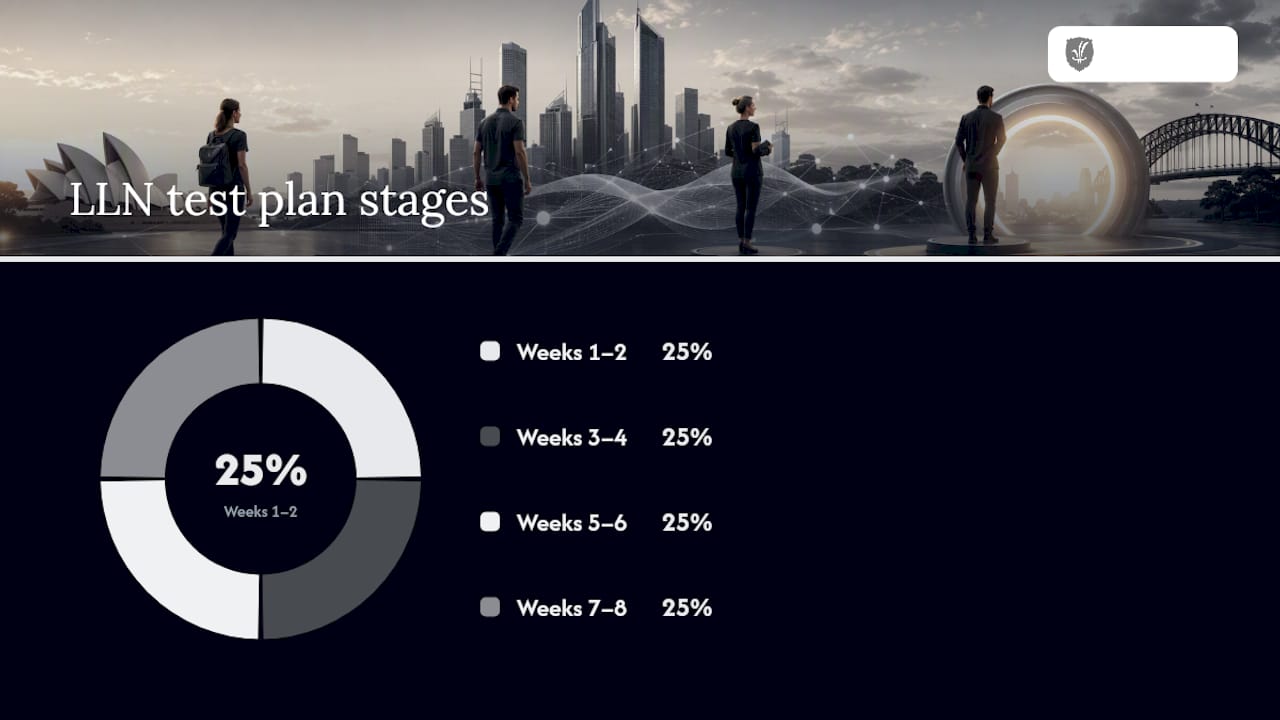
Here's a practical week-by-week structure:
- Weeks 1 to 2 — Take a free practice quiz to identify weak ACSF strands. LLN Quiz from Learning Resources Group offers standard and advanced versions mapped to ACSF levels, which is a fast way to see where you actually sit.
- Weeks 3 to 4 — Focus daily practice (15 to 20 minutes) on your weakest strand. If numeracy is the gap, work through measurement conversions, percentages and reading simple data tables. If it is reading or writing, practise with workplace documents such as safety instructions, rosters or short emails.
- Weeks 5 to 6 — Introduce timed conditions using a printable LLN practice test, scoring yourself against the answer key to see genuine improvement.
- Weeks 7 to 8 — Do a final full-length timed run under test-like conditions, then rest rather than cram the night before.
If you want to schedule this properly rather than let it slide, a study planning tool such as Syncronos can help organise regular study sessions over several weeks, which matters more than it sounds when you are studying around a full-time job.
Pro Tip: Simulate real test conditions at least twice before the actual assessment. Set a timer, put your phone away, and mark your own answers honestly. Most people underestimate how much timing pressure changes performance, and knowing that in advance beats discovering it mid-test.
If you fall short of the required level: support, RPL and other pathways
Falling under Exit Level 3, or below the level your course needs, is not a dead end. RTOs are expected to identify these gaps early and offer genuine support rather than simply closing the door, because retention and completion depend on it.
Support usually takes one of a few forms:
- Foundation skills units embedded into your main course, so literacy or numeracy support happens alongside your qualification rather than as a separate hurdle
- Co-enrolment in a dedicated foundation skills program before you start the main course
- Referral to a specialist literacy or numeracy provider
- Recognition of Prior Learning or credit transfer, where relevant experience or previous study may reduce what you need to complete, assessed case by case
CTDI structures its online diploma courses with self-paced delivery and access to student support, which suits learners who need to work through material at their own speed or want somewhere to ask questions about entry requirements before committing.
Considering an online diploma with flexible support
If an LLN check has flagged gaps, or you simply want a study format that fits around work and family commitments, a self-paced online diploma removes the fixed classroom timetable that trips a lot of adult learners up. CTDI delivers nationally recognised online diplomas in artificial intelligence, digital marketing and environmentally sustainable management, with course design built by industry practitioners and student support available if you have questions about entry requirements, pacing or how LLN expectations apply to your chosen course.

Reach out to CTDI's student support team before you enrol if you are unsure whether your current literacy or numeracy level suits a particular diploma. They can talk you through what the course involves and how flexible the study load actually is week to week. If you are ready to move forward, you can enrol now and start structuring your study around your existing work commitments rather than the other way around.
Sources
- Language, literacy and numeracy - Department of Employment and Workplace Relations, Australian Government
- Australian Council for Educational Research (ACER)
- LLN Language Literacy and Numeracy practice test PDF — PractiseTestGeeks
FAQ
What is an LLN test for VET students?
It is a diagnostic check of your reading, writing, oral communication, numeracy and learning skills, used by RTOs to match you with the right support before or during a vocational course.
Do I need to pass the LLN test to enrol?
There is no pass or fail. The result determines what support you receive, though VET Student Loans applicants must specifically demonstrate ACSF Exit Level 3 in reading and numeracy to access the loan.
Which LLN assessment tools do RTOs actually use?
Commonly approved tools include the Core Skills Profile for Adults, bksb, FSAT, and the VFH LLN tool via LLN Robot, all listed by the Department of Employment and Workplace Relations.
How long does an LLN test take?
Most are snapshot assessments running between 15 and 60 minutes, depending on how many skill areas the provider checks.
What happens if I don't meet the required LLN level?
Your RTO should offer support such as embedded foundation skills units, co-enrolment in a specialist program, or referral to additional literacy and numeracy help rather than refusing enrolment outright.
Can I practise for an LLN test beforehand?
Yes. Free resources such as LLN Quiz and printable practice tests let you identify weak areas and build familiarity with timing and task types.
Recommended
- Vet student loans eligibility: what Australian students need to check
- Study now, pay later in Australia: what you need to know
- Vocational training in Australia: how to find accredited courses
- Career pathways in Australia: your 2026 guide
This article provides general information only. Course requirements, study pathways, credit arrangements and career outcomes may vary. Always confirm current requirements with the relevant education provider or authority.