

TL;DR:
- Student support in Australia includes academic, wellbeing, disability, financial, and career services provided by education providers. These supports are legally mandated, free, and accessible through specific contact points, with policies requiring annual review and reporting. Building strong relationships between students and support staff enhances outcomes and prevents crises in both on-campus and online settings.
Student support is the full range of academic and non-academic services Australian education providers use to help students succeed, from tutoring and mental health counselling to disability adjustments, financial hardship grants, and formal complaints processes. If you are a student struggling with coursework, wellbeing, or life circumstances, or an educator trying to understand your obligations, student support is the system designed to catch you before you fall through the cracks.
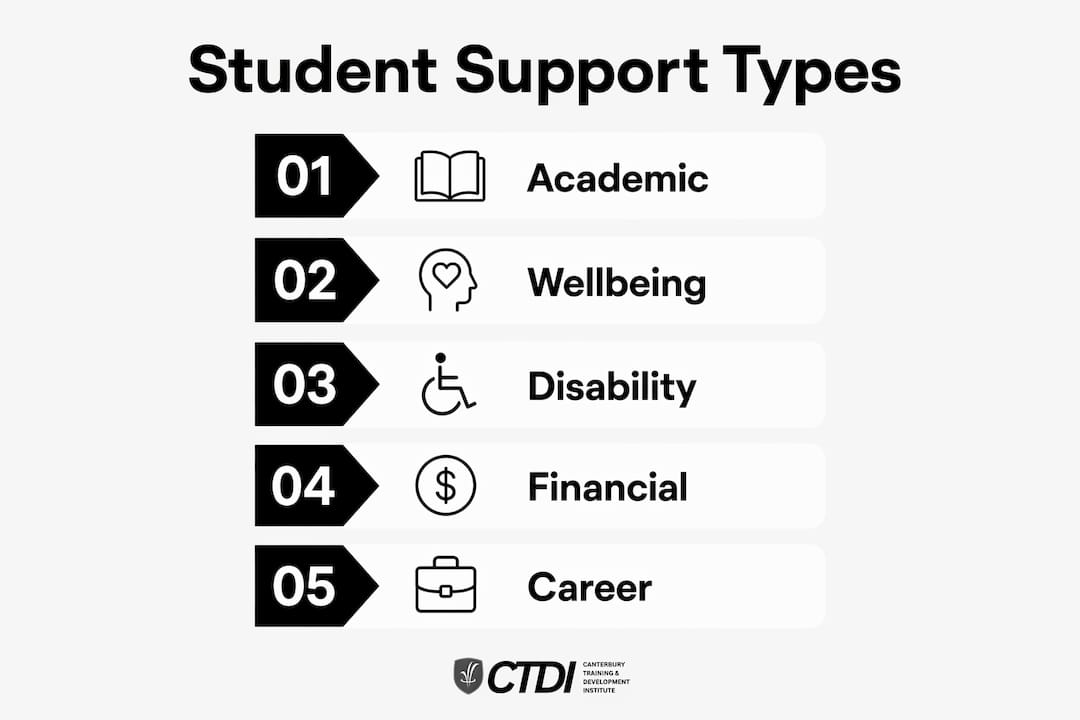
At a glance, student support covers:
- Academic help: tutoring, literacy and numeracy assistance, study skills, assessment extensions
- Wellbeing and mental health: counselling, crisis referral, allied-health services
- Disability and inclusion: reasonable adjustments, access plans, assistive technology
- Financial hardship: emergency grants, bursaries, equipment loans
- Career services: career planning, resume support, internships
- Specialist supports: First Nations students, international students, athletes, students affected by family violence
Under the Higher Education Support Act 2003, every eligible higher education provider in Australia must have a formal Support for Students Policy, comply with it, and report on it annually. Non-compliance carries a civil penalty per contravention as set by law. The Australian Government's Department of Education and Victoria's Student Support Services (SSS) are two of the most authoritative sources shaping how these obligations are met in practice.
Table of Contents
- What does student support include?
- Who provides student support and where do you find it?
- How do you actually access student support?
- What does Australian law require from providers?
- Disability support and inclusion: what reasonable adjustments look like
- Reporting safety concerns and making complaints
- What should you realistically expect from student support?
- How online and VET students access support
- Key takeaways
- Why relationship-based support changes outcomes
- Supportive online study with Edu
- Useful sources
What does student support include?
Student support services fall into two broad streams: academic and non-academic. Both matter, and most providers are legally required to offer both.
Academic supports
Tutoring, literacy and numeracy programmes, and study skills workshops are the most common entry points. Beyond those, academic support includes assessment adjustments such as extensions, special consideration applications, and alternative exam formats. Students with documented needs can request these through their course coordinator or disability services team.
Wellbeing and mental health
Counselling is the cornerstone here, ranging from short-term solution-focused sessions to crisis referral for students in acute distress. Providers are expected to have crisis response arrangements in place, not just a phone number on a webpage. Allied-health professionals, including psychologists and social workers, are often part of the team, particularly in school settings.
Disability and inclusion
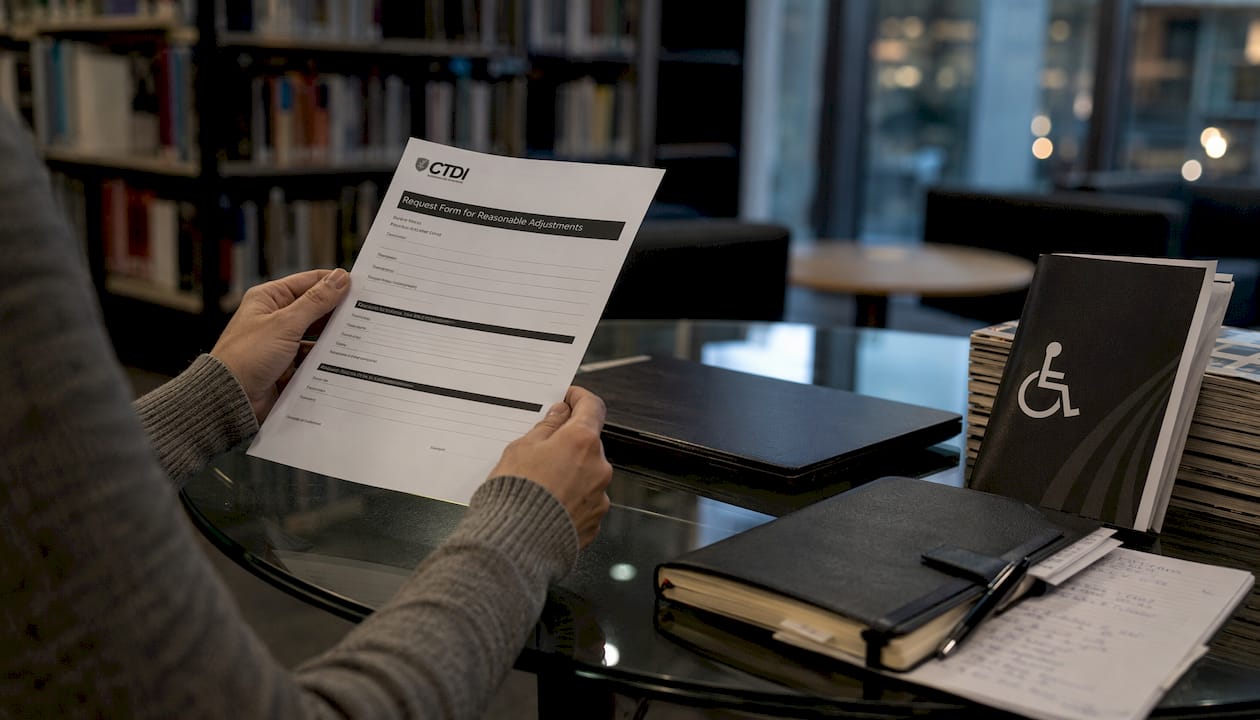
Reasonable adjustments are the legal mechanism that makes study accessible for students with disability. Extended assessment time, alternative formats, assistive technology, and flexible attendance arrangements all fall under this category. An access plan, developed with the disability services team, documents what adjustments apply and for how long.
Financial hardship
Emergency grants, short-term loans, and equipment bursaries exist at most universities and many VET providers. Eligibility criteria vary, but the intent is consistent: remove financial barriers before they cause a student to withdraw.
Career and transition services
Career planning, CV and resume workshops, interview skills coaching, and employer liaison are standard at higher education providers. These services help students move from study into employment, which is the whole point of vocational and tertiary education.
Specialist supports
First Nations students, international students, elite athletes, and students affected by family or domestic violence or sexual harm each have distinct needs. Good providers build culturally appropriate supports into their policy, not as an afterthought but as a named commitment. For international students, academic English pronunciation support can be a practical starting point alongside formal language programmes.
Pro Tip: If you are unsure which category your need falls into, contact your provider's general student services or wellbeing team first. They triage and refer internally, so you do not need to know the right department before you reach out.
Who provides student support and where do you find it?
The answer depends on whether you are at school, university, or studying through a VET or online provider.

| Provider type | Who delivers support | Typical setting |
|---|---|---|
| Government schools (Victoria) | Student Support Services (SSS) multidisciplinary teams: psychologists, speech pathologists, social workers, occupational therapists, behaviour analysts | Area-based teams visiting schools; referrals via SOCS platform |
| Higher education (universities) | Internal wellbeing centres, disability services, counselling, career services, advocacy officers | On-campus hubs, online portals, embedded in faculties |
| VET and online providers | Trainers, student services staff, online portals, remote counselling | Learning management systems, email, video appointments |
| External allied-health partners | Psychologists, speech pathologists, occupational therapists contracted by schools or providers | School visits, telehealth, community clinics |
| Government (federal) | Department of Education, Study Assist guidance, funding frameworks | Policy and compliance; not direct service delivery |
Victoria's SSS model is one of the most developed in the country. These are multidisciplinary area-based teams that work alongside school wellbeing workforces to deliver universal and targeted services. They respond to critical incidents, build educator capacity, and provide specialised assessment and intervention for students who need it most.
At the university level, the University of Sydney is a well-cited example of a comprehensive support model, with dedicated disability services, counselling, financial support, and First Nations student services operating as distinct but connected units.
External allied-health partnerships are increasingly common in secondary schools. Providers like Emble Allied Health work with schools to deliver assessments and participation-focused interventions, with funding drawn from school budgets, NDIS, and grants depending on the student's circumstances.
How do you actually access student support?
The path from "I need help" to "I am getting help" has a few clear steps, and knowing them saves time.
-
Identify your need. Is this academic (struggling with coursework, need an extension), wellbeing (mental health, stress, crisis), disability-related (need adjustments), or financial? You do not need a precise answer, but a rough category helps you reach the right entry point faster.
-
Contact the right entry point. For academic issues, your unit or course coordinator is usually first. For wellbeing or mental health concerns, go directly to the student wellbeing or counselling team. For disability adjustments, contact disability services. For financial hardship, student services or the financial assistance team. Most providers publish these contacts on their student portal.
-
Assessment and triage. The team you contact will assess your situation, sometimes in a brief intake conversation, sometimes through a short form. For urgent or crisis situations, triage happens immediately. For routine support, expect a response within a few business days.
-
Support plan and delivery. Once assessed, you will receive a plan, whether that is an access plan for disability adjustments, a referral to counselling, or approval for a financial grant. Follow through on any steps the plan requires from you.
-
Review and escalation. If the support is not working or your circumstances change, contact your support coordinator to review the plan. If you are dissatisfied with how a request was handled, use the provider's formal complaints or appeals process.
For emergencies: If you or someone else is at immediate risk, call 000 first. Most providers also have a 24/7 crisis line or referral to Lifeline (13 11 14). Do not wait for a business-hours appointment in a genuine crisis.
Consent matters in school settings. Under Victorian government guidance, parental or carer consent is required before SSS professionals deliver direct services to a student. This is obtained using the SSS and VTS consent form and lodged through the Student Online Case System (SOCS).
Providers are also legally required to tell you, at the time you request support before the census date, that the census date is when your HECS-HELP or FEE-HELP debt is incurred. If you are considering withdrawing from a unit, understanding this timing is critical.
Pro Tip: Before your first appointment, write down the specific issue, when it started, any relevant documentation (medical certificates, financial statements, correspondence), and what outcome you are hoping for. Providers move faster when they have clear information upfront.
What does Australian law require from providers?
The Support for Students Policy requirement sits inside the Higher Education Support Act 2003, specifically Section 19-43. It replaced the previous 50% pass rate requirements and set a more holistic standard.
| Legal requirement | What it means in practice |
|---|---|
| Publish a Support for Students Policy | Must be publicly available on the provider's website |
| Describe how at-risk students are identified | Policy must name the methods and triggers used |
| Describe available supports | Academic and non-academic services must be listed |
| Annual review of the policy | Providers must review and update annually |
| Annual compliance reporting | Must include qualitative, de-identified information on support effectiveness |
| Civil penalty for non-compliance | 60 penalty units per contravention |
The reporting obligation is worth understanding. Providers cannot simply tick a box and submit numbers. They must include qualitative, de-identified information on how supports are offered and how effective they are. That requirement pushes providers toward genuine reflection rather than compliance theatre.
The Chapter 10A legislative framework also requires providers to communicate census-date implications to students who request support before that date. This is a student-rights provision, not just an administrative detail.
Disability support and inclusion: what reasonable adjustments look like
Reasonable adjustments are not a favour. They are a legal entitlement for students with disability, and a well-run disability services team will help you document and activate them quickly.
Common adjustments include:
- Extended time for assessments (typically 10 minutes per hour of exam time, though this varies)
- Separate or low-distraction exam rooms
- Alternative assessment formats (oral instead of written, take-home instead of timed)
- Assistive technology access (screen readers, speech-to-text software)
- Flexible attendance arrangements where the learning outcome is not compromised
- Note-taking support or lecture recordings
Allied-health professionals play a central role in both assessment and delivery. In Victorian government schools, SSS teams include psychologists, speech pathologists, occupational therapists, and behaviour analysts who collaborate with classroom teachers to design and monitor adjustments. At the university level, a psychologist's report or specialist assessment is often required to activate an access plan.
For First Nations students, culturally appropriate support means more than a dedicated officer. It means the provider's policy explicitly names how cultural obligations, community responsibilities, and Country-based learning are accommodated, not treated as absences to be managed.
Pro Tip: Request your access plan at the start of the academic year or semester, not the week before an exam. Adjustments take time to process and communicate to teaching staff, and late requests are harder to action without disruption.
For educators working with students who need differentiated approaches, differentiated instruction guidance can help bridge the gap between a student's access plan and day-to-day classroom practice.
Reporting safety concerns and making complaints
Some situations require immediate action, not a form.
Report immediately (call 000 or your provider's crisis line) if:
- A student is at immediate risk of harm to themselves or others
- Sexual assault has occurred or is occurring
- A child is at risk of abuse or neglect (mandatory reporting applies)
Use formal reporting channels for:
- Sexual harassment or discrimination
- Family and domestic violence disclosures
- Bullying, misconduct, or serious wellbeing concerns that are not immediate emergencies
The formal process typically runs:
- Report to the provider's student safety or wellbeing team, or via the online reporting portal.
- Triage by a trained staff member who assesses urgency and assigns a case manager.
- Support plan developed with the student, including referrals to counselling, legal support, or external agencies as needed.
- Follow-up at agreed intervals, with the option to escalate to an independent advocate or the provider's formal complaints process if the student is not satisfied.
Confidentiality has limits. Providers have a duty of care that can require escalation even when a student has asked for privacy. Staff should explain these limits at the first point of contact, not after the fact.
What should you realistically expect from student support?
Confidentiality: Most student support conversations are confidential. The exceptions are mandatory reporting situations (child safety, imminent risk of harm) and cases where duty of care requires escalation. Ask your support contact to explain the limits at your first meeting.
Timelines: Routine counselling referrals typically take a few business days to a week for an initial appointment. Disability access plans can take one to two weeks if documentation is required. Financial hardship applications vary by provider but are often processed within five to ten business days. Crisis support is immediate.
Costs: Core counselling, advocacy, and referral services at higher education providers are free. Providers cannot charge students for access to independent advocacy and referral services. Some specialist allied-health assessments (private psychological assessments, for example) may incur fees if accessed outside the provider's contracted services.
Your responsibilities: Engaging with support is a two-way process. If you are offered an appointment, attend it. If your circumstances change, update your support team. If you disagree with a decision, use the appeals or grievance process rather than disengaging.
How online and VET students access support
Distance does not reduce your entitlement to support. It changes how you access it.
Online and VET students typically access support through:
- Learning management system (LMS) messaging and announcements
- Dedicated student portals for submitting requests and tracking cases
- Email or video appointments with trainers and student services staff
- Remote counselling via telehealth platforms
- Regular trainer check-ins built into the course schedule
Edu (CTDI) delivers its courses entirely online, with self-paced study supported by expert trainers and a student portal where learners can access resources and request support. The support services approach mirrors the obligations that apply to all registered Australian providers, with clear channels for academic help, wellbeing referrals, and adjustment requests.
For online students, building a clear support record matters as much as the support itself. Save timestamps on portal submissions, keep email summaries of conversations with trainers, and screenshot any confirmation of a request lodged. If a case needs to be escalated or reviewed, a clear paper trail speeds the process considerably.
Pro Tip: Do not wait until you are behind in your coursework to reach out. Most online providers have early-alert systems that flag disengagement, but a proactive email to your trainer at the first sign of difficulty will always get a faster, more tailored response than a system-generated flag.
Key takeaways
Student support in Australia is a legislated, multidisciplinary system covering academic, wellbeing, disability, financial, and career needs, and every eligible higher education provider must publish and comply with a formal Support for Students Policy.
| Point | Details |
|---|---|
| Legal right to a policy | Every eligible higher education provider must publish a Support for Students Policy under the Higher Education Support Act 2003. |
| Free advocacy | Providers cannot charge students for independent advocacy and referral services covering grievances, complaints, and discrimination. |
| Census date matters | Request support before the census date; providers must tell you when your HECS-HELP or FEE-HELP debt is incurred. |
| Start with wellbeing or student services | If you are unsure where to go, the general wellbeing or student services team will triage and refer you to the right support. |
| Edu's online support model | Edu (CTDI) provides trainer support, a student portal, and structured wellbeing referral pathways for fully online VET students across Australia. |
Why relationship-based support changes outcomes
The policy framework is necessary, but it is not sufficient on its own. What actually shifts outcomes for students is the quality of the relationship between the student and the people delivering support.
The trend in Australian education is toward integrated, multidisciplinary workforces that build educator capacity for early identification and preventative wellbeing, reducing reliance on crisis response. That shift matters because crisis response is expensive, disruptive, and often too late. A psychologist who visits a school regularly and knows the students by name will spot a problem weeks before it becomes a referral.
The same principle applies in online and VET settings. A trainer who checks in proactively, who notices when a student goes quiet in week three, and who knows how to make a warm referral to student services is doing more preventative work than any policy document. Successful student support is relationship-based and practical: interventions tailored to the student's actual learning environment deliver better outcomes than one-size-fits-all clinical models.
Providers who treat their Support for Students Policy as a compliance document rather than a living practice guide will meet the letter of the law and miss the point entirely. Students notice the difference.
Supportive online study with Edu
If you are looking for a VET provider that takes student support seriously in an online environment, Edu (CTDI) offers nationally recognised diplomas in AI, digital marketing, and environmental management, delivered entirely online at your own pace.

What sets Edu apart for remote learners is the combination of industry-expert trainers, a structured student portal, and clear pathways to wellbeing and academic support, without the commute or rigid timetable of campus study. Every enrolled student has access to trainer guidance and a support framework that aligns with Australia's registered provider obligations.
Ready to study with a provider that has support built in from day one? Enrol now and explore courses designed for working Australians who need flexibility without sacrificing quality.
Useful sources
The following primary sources were used in this article and are worth bookmarking if you need to verify provider obligations or access official guidance.
| Source | What it covers |
|---|---|
| Higher Education Support Act 2003 | Annual review and publication obligations for Support for Students Policy |
| Chapter 10A — Support for Students Policy (legislation.gov.au) | Full legislative requirements including census-date communication and reporting |
| Study Assist — Support for Students Policy (Australian Government) | Plain-English summary of policy requirements and student rights |
| Department of Education — Support for Students Policy FAQ | Frequently asked questions on policy obligations and compliance |
| Student Support Services — Victorian Department of Education | Structure, roles, and referral process for Victoria's SSS multidisciplinary teams |
| Health and Wellbeing Inclusion Workforces — Victoria | HWIW model, HWKC function, and consent requirements for school-based services |
| Health and wellbeing staff in schools — vic.gov.au | Allied-health roles, consent processes, and targeted intervention guidance |
| LawCompliance — New policy requirements for higher education providers | Civil penalty exposure and compliance obligations under the Higher Education Support Act |
This article provides general information about student support in Australia and does not constitute legal or professional advice. For your specific situation, consult your provider's published Support for Students Policy or a qualified student advocate.