

TL;DR:
- Online training enrolment involves a step-by-step process of registering, submitting documents, paying, and gaining access entirely online, enabling flexible career pathways. Preparation of documents, understanding eligibility categories, and tracking session start dates are crucial for a smooth and timely enrolment; flexible start models like rolling admissions facilitate quicker access for learners. International students should clarify visa requirements, prepare English proficiency evidence, and understand that online study generally does not require a student visa unless in-person components are involved.
Online training enrolment is the digital, stepwise process of registering, selecting courses, paying, and gaining access to study materials entirely online, without setting foot in a classroom. For career-focused learners in Australia and abroad, this process opens doors to flexible career pathways that traditional study simply cannot match. This online training enrolment guide covers every stage from prerequisites and document preparation through to payment, verification, and your first login, drawing on procedures used by leading institutions including Heriot-Watt University, Michigan State University, and Canterbury Training and Development Institute (CTDI). Whether you are a domestic student upskilling for a promotion or an international learner building credentials from overseas, the steps are clearer than most people expect.
What are the prerequisites for online training enrolment?
Prerequisites are the entry conditions a provider checks before confirming your place, and getting them right early is the single biggest factor in how fast you start. Most vocational and diploma-level programmes require evidence of prior qualifications, such as a completed secondary certificate, a recognised diploma, or relevant work experience. Some providers accept a combination of both, particularly for mature-age applicants who left formal study years ago.
The documents you will typically need to gather include:
- Academic transcripts or certificates from your highest level of completed study
- A current government-issued photo ID such as a passport or driver's licence
- Proof of English language proficiency for international applicants (discussed further below)
- A résumé or work history summary for programmes that accept experience-based entry
- Employer letters or professional references where performance-based admission routes apply
Eligibility verification is consistently identified as the most challenging step in the enrolment process, not the online form itself. This means the paperwork you prepare before clicking "Enrol now" determines whether your start date is days away or weeks away.
Domestic students in Australia generally face fewer documentation hurdles. Nationally recognised qualifications from the Australian Qualifications Framework (AQF) are accepted directly, and English proficiency is assumed for citizens and permanent residents. International students face additional requirements, which are covered in detail in the section below.
Pro Tip: Scan and save certified copies of all your documents in a single folder before you begin any application. Most portals impose file size limits of 2 MB to 5 MB per upload, and having pre-sized PDFs ready prevents last-minute delays.
Understanding your eligibility category before you start also matters. Providers typically distinguish between standard academic entry, mature-age entry, and credit transfer entry for students with prior learning. Choosing the wrong pathway on your application form can trigger a manual review that adds days to your timeline.
How does the online course enrolment process typically work?
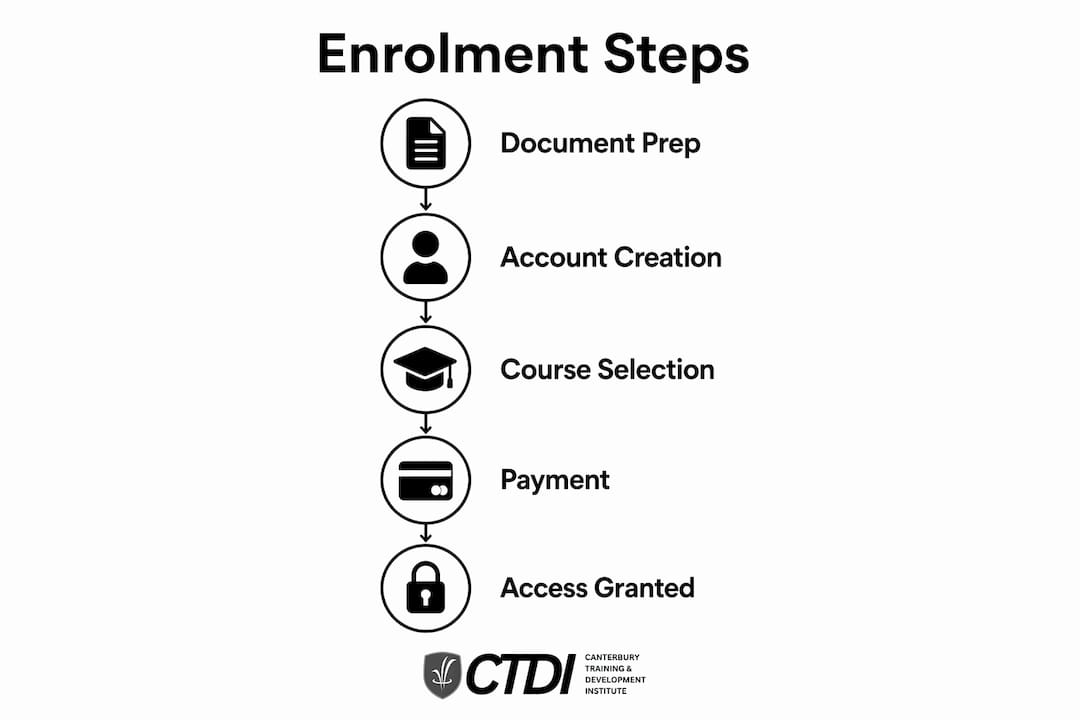
The standard online course registration process follows a predictable chain of steps, and knowing the sequence prevents confusion when portals behave unexpectedly. Here is how most reputable providers structure it:
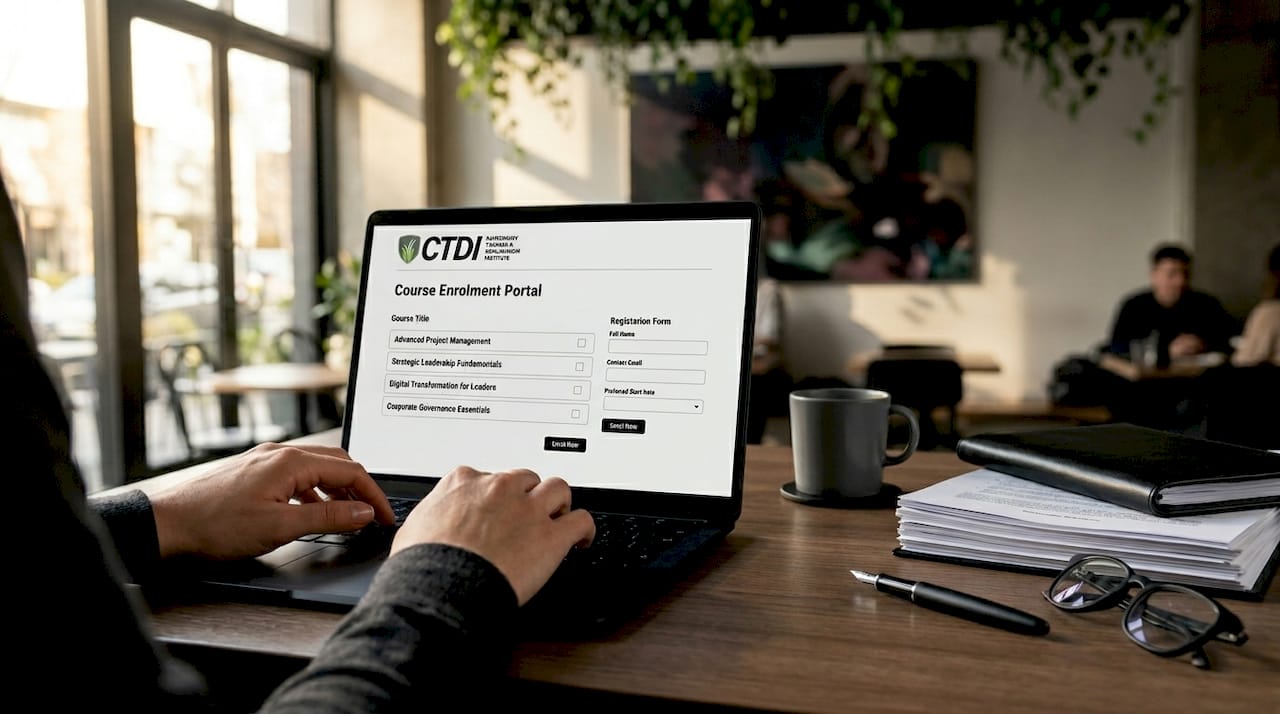
- Create an account on the provider's learning portal using your email address and a secure password.
- Select your course or programme, choosing either a single subject or a full qualification depending on your goals and budget.
- Complete the application form, entering personal details, uploading documents, and confirming your chosen start period.
- Proceed to checkout or payment, entering card details or selecting an invoice option for employer-funded study.
- Receive a confirmation email with your enrolment reference and next steps.
- Wait for eligibility verification by the provider's student engagement team, who review your documents and contact you if anything is missing.
- Receive your LMS login credentials and access your course materials to begin study.
MSU's non-credit system follows this exact model: learners create a guest account, add courses to a cart, complete checkout, and receive a confirmation email. Free courses process immediately after login, while paid courses require payment confirmation before access is granted. This distinction matters because some providers list free introductory modules alongside paid full programmes, and selecting the wrong tier delays your actual study start.
The table below compares two common enrolment models you will encounter:
| Feature | Rolling start model | Fixed intake model |
|---|---|---|
| Start date | Within days of verification | Set term dates (e.g., March, July) |
| Flexibility | High. Begin when documents clear | Low. Must wait for next cohort |
| Verification pressure | Moderate. Faster turnaround needed | Lower. More lead time available |
| Best suited for | Career changers needing fast access | Learners who prefer structured cohorts |
Programmes with rolling starts allow learners to begin within days of verification without fixed term dates. This is a significant advantage for professionals who cannot wait three months for the next intake to open.
The overall enrolment timeline varies by provider. Document verification alone can take one to three weeks, making it the most variable phase in a process that spans two to four weeks from initial inquiry to first login. Plan your study start date with that buffer in mind.
Pro Tip: Some providers, including Heriot-Watt, let you purchase courses progressively rather than paying for an entire programme upfront. Starting with a single subject reduces your financial commitment while you confirm the programme suits your goals.
How do you troubleshoot common enrolment issues and avoid mistakes?
Technical and administrative problems during enrolment are common, but nearly all of them are preventable with the right preparation. The most frequent issues fall into three categories: technical portal errors, documentation delays, and misunderstandings about refund and withdrawal policies.
For technical problems, the following fixes resolve the majority of cases:
- Browser compatibility: Use Google Chrome or Mozilla Firefox. Many enrolment portals do not render correctly in Safari or older versions of Microsoft Edge.
- File upload failures: Compress PDFs to under 2 MB using tools like Adobe Acrobat or Smallpdf before uploading. Scanned images saved as high-resolution JPEGs are the most common cause of oversized files.
- Portal timeout errors: Complete your application in one session where possible. Many portals log you out after 20 to 30 minutes of inactivity, losing unsaved progress.
- Payment gateway errors: Disable browser extensions such as ad blockers before entering card details. These extensions frequently interfere with payment processing scripts.
- Missing confirmation email: Check your spam or junk folder immediately. Add the provider's domain to your safe senders list before you begin.
Documentation delays are the second major source of hold-ups. If your academic institution is slow to issue transcripts, contact your provider's enrolment team proactively and explain the situation. Most providers will allow a conditional enrolment while you await official documents, provided you supply a statutory declaration or a scanned unofficial copy as a placeholder.
Refund and withdrawal policies are triggered by the programme session start date, not the date you enrolled or paid. Cornell University's policy, for example, defines a zero-refund window beginning from the session start date, with prorated charges applying in the days immediately before that point. Tracking your session start date separately from your enrolment date is critical for managing any change of plans.
Refund windows based on session start catch many learners off guard because they assume the clock starts when they pay. It does not. If your circumstances change, contact your provider before the session begins, not after.
Communicating clearly with enrolment teams also prevents avoidable delays. When you email or call, include your full name, application reference number, and the specific document or issue in question. Vague enquiries take longer to resolve because staff must locate your file before they can help.
What should international students know about enrolling in online training?
International students enrolling in fully online programmes face a distinct set of requirements that differ from both domestic enrolment and traditional on-campus international study. Understanding these differences upfront prevents the most common delays.
The most important distinction is visa status. Fully online students generally do not require a student visa provided they complete all study remotely and never attend the institution's physical campus. This applies to Australian providers delivering 100% online programmes to overseas learners. The exception arises if any component of the programme requires in-country attendance, such as a residential workshop or practical placement.
Beyond visa considerations, international applicants should prepare for the following:
- English language proficiency evidence, typically an IELTS Academic score of 6.0 or higher, a TOEFL iBT score of 79 or above, or equivalent results from Pearson PTE Academic
- Credential evaluation, where qualifications from non-English-speaking countries are assessed for equivalency to Australian AQF levels
- Certified translations of any documents not originally in English, prepared by a NAATI-accredited translator in Australia
- Proof of identity via a valid passport with at least six months' validity beyond your intended study period
English proficiency requirements vary by programme and provider. Exemptions typically apply to citizens of countries where English is the primary language of instruction, or to applicants who completed their most recent qualification in English. Always confirm your exemption status directly with the provider rather than assuming it applies.
International applicants should also separate admission document requirements from immigration steps. Confusing the two is a frequent source of unnecessary delays, particularly for learners who have previously studied on a student visa and assume the same process applies to online enrolment.
Pro Tip: Use a free tool like NueCareer's skills identifier to articulate your professional experience clearly before writing your application statement. Many international applicants underestimate how much their work history strengthens an experience-based entry application.
Financial aid eligibility for international online students varies significantly. Most Australian government-funded concessions and VET Student Loans apply only to domestic students. International learners should budget for full fee payment and investigate whether their employer or home country government offers professional development funding.
Key takeaways
Successful online training enrolment requires early document preparation, a clear understanding of your eligibility category, and accurate tracking of session start dates rather than payment dates.
| Point | Details |
|---|---|
| Prepare documents first | Gather transcripts, ID, and proficiency evidence before opening any enrolment portal. |
| Know your start model | Rolling start programmes let you begin within days; fixed intakes require advance planning. |
| Track session start dates | Refund and withdrawal windows are triggered by session start, not enrolment or payment date. |
| International visa clarity | Fully online study typically requires no student visa unless physical attendance is involved. |
| Progressive payment option | Buying single courses before committing to a full programme reduces financial risk and starts study sooner. |
What I have learned from watching learners navigate enrolment
After working closely with online learners across vocational and diploma programmes, the pattern I see most often is this: people spend weeks researching which course to take, then rush the actual enrolment in an afternoon. That imbalance is where most problems originate.
The learners who start fastest are the ones who treat document preparation as a separate task completed before they touch the enrolment form. They have their transcripts certified, their ID scanned, and their English proficiency results saved as a PDF before they create an account. The ones who struggle are those who discover mid-application that their transcript is locked behind a university records office with a two-week turnaround.
The second thing I have noticed is that progressive course purchasing is underused. Providers like Heriot-Watt offer the option to buy a single subject rather than an entire programme upfront. Most learners default to the full programme purchase because it feels more committed, but starting with one course and confirming the learning style suits you is a smarter use of money. The role of expert trainers in keeping you engaged once you are inside the course matters far more than the payment structure you chose on day one.
My honest advice on start dates: build in a two-week buffer beyond your ideal start date when planning around a career milestone like a promotion application or a job interview. Verification timelines are variable, and providers cannot always control how quickly third-party institutions respond to transcript requests. Flexibility in your planning removes the stress from a process that is otherwise straightforward.
— Sam
Start your enrolment with CTDI today
Canterbury Training and Development Institute (CTDI) offers a clear, fully online enrolment process designed for career-focused learners in Australia and internationally. Whether you are drawn to the Advanced Diploma of Digital Marketing, the Certificate IV in Environmental Sustainable Management, or another nationally recognised qualification, CTDI's self-paced format means you study on your schedule.
Expert trainers guide you through each unit, and the student support team is available to assist with document verification and any enrolment questions. Explore the full range of diplomas and start your enrolment today to take the next step in your career.
FAQ
What documents do I need to enrol in an online training programme?
Most providers require a government-issued photo ID, academic transcripts from your highest completed qualification, and a résumé or work history summary. International applicants also need English language proficiency evidence and certified translations of non-English documents.
Do international students need a visa for fully online study?
Fully online students generally do not require a student visa provided all study is completed remotely with no physical attendance at the institution's campus. Always confirm this with your provider before enrolling, as exceptions apply if any in-person component exists.
How long does the online course registration process take?
The full enrolment timeline typically spans two to four weeks, with document verification taking one to three weeks as the most variable phase. Programmes with rolling start dates allow access within days of verification completing.
What happens if I need to withdraw after enrolling?
Refund and withdrawal eligibility is calculated from the programme session start date, not the date you enrolled or paid. Contact your provider before the session begins to understand your options, as most providers apply a zero-refund policy after a defined number of days from session start.
Can I enrol in one course at a time rather than a full programme?
Some providers allow progressive course purchases, letting you begin with a single subject and add further courses as you progress. This approach reduces upfront financial commitment and lets you confirm the programme suits your learning style before paying for the full qualification.