

If you want a practical, low-risk way to choose training, verify any provider on training.gov.au, check ASQA for regulatory notices, and shortlist providers whose scope matches your career goal. For working adults after a flexible, online pathway in AI, digital marketing or environmental management. Canterbury Training & Development Institute is a direct option worth comparing, provided you still confirm its scope and your intended qualification yourself.
Table of Contents
- Why you can trust this guide
- Actionable checklist to shortlist and compare RTOs
- How to check training.gov.au and ASQA notices step by step
- Which course areas and qualification levels tend to deliver better career returns
- Practical costs and the regulatory risks that can affect students and employers
- Why Canterbury Training & Development Institute may be the right option for many readers
- Sources
- FAQ
Why you can trust this guide
This guide is written by Sam, drawing on publicly available regulatory sources and sector data to help Australian learners and employers make an informed, verification-first decision rather than relying on marketing claims alone. The approach favours official sources over provider rankings, because rankings are rarely independently audited.
- Every claim about registration, fees or cancellations in this guide is drawn from Training or ASQA, not from provider marketing.
- Canterbury Training & Development Institute (CTDI) delivers nationally recognised courses in artificial intelligence, digital marketing and environmental management, and offers RPL guidance to prospective students.
- Where a provider publishes outcome data, student testimonials or case studies, treat these as supporting evidence, not a substitute for checking scope and registration yourself.
Actionable checklist to shortlist and compare RTOs
Choosing between providers gets easier once you follow a fixed sequence rather than comparing marketing pages side by side.
- Search the provider's name or RTO code on training.gov.au and confirm the specific qualification is on its current scope.
- Check that the qualification aligns with the industry or role you're targeting, and look at whether it offers a pathway to a higher-level diploma, advanced diploma or vocational degree.
- Match the delivery mode (100% online, blended or workplace-based) to your work schedule, caring responsibilities and how you learn best.
- Review the provider's student support offering, its assessment methods, and its recognition of prior learning (RPL) policy before you enrol.
- Ask how the course is funded, whether it's a state-subsidised place, fee-for-service or employer-funded, and get every fee in writing.
- Watch for red flags: recent ASQA enforcement action against the provider, vague or overly broad scope descriptions, and little visible evidence of assessment rigour.
Pro Tip: Save a screenshot of the provider's training.gov.au scope page on the day you enrol, since scope can change and you may need proof of what was current when you signed up.
Funding sources matter more than they first appear. A course subsidised through a state training account will have different eligibility rules and fee caps than the same qualification sold fee-for-service, and an employer funding your training may have its own reimbursement conditions attached.

How to check training.gov.au and ASQA notices step by step
Verification takes a few minutes and should happen before you pay anything.
- Search the provider by name or RTO code on training.gov.au, then open its scope of registration and confirm your exact course appears as a current training product.
- Search the provider on ASQA's site for regulatory notices, sanctions or cancellation decisions, and read the decision detail rather than just the headline.
- If a qualification has been cancelled, your options include seeking RPL with another registered provider, contacting ASQA directly for guidance, and checking the government's Your Career service for teach-out advice.
Which course areas and qualification levels tend to deliver better career returns
Higher-level VET qualifications, diplomas, advanced diplomas and the newer vocational degree, tend to align more closely with skilled roles and progression than entry-level certificates on their own, though outcomes always depend on the industry and the individual. The Department of Education has added the vocational degree as a new AQF qualification type, widening the pathway options between VET and higher education.
- Artificial intelligence, digital marketing and environmental management are priority areas because they sit close to current industry hiring needs and each has a genuine progression ladder from certificate to diploma level.
- Short courses and micro-credentials suit topping up a specific skill quickly, while a full qualification suits building a recognised, portfolio-level credential for a career change.
- Always verify any pathway or credit transfer claim directly with the receiving institution rather than relying on a provider's marketing page, since arrangements change and are never guaranteed.
In 2025, the majority of people completing a qualification in government-funded VET did so for employment-related reasons, according to the Productivity Commission, underlining that most learners choose VET as a direct route to work rather than personal interest alone.
Practical costs and the regulatory risks that can affect students and employers
Provider fees are shaped partly by regulatory overheads. ASQA charges registration, assessment and ongoing fees, plus an Annual Registration Charge that varies by scope size and CRICOS status, and providers factor these costs into what they charge students.
- Online-only and smaller private RTOs can offer lower fees, but this depends on maintaining genuine student support rather than cutting corners on it.
- ASQA has shown it will act decisively: in one recent case it cancelled an RTO's qualifications and registration after finding systemic non-compliance, leaving enrolled students needing RPL or a teach-out arrangement elsewhere.
- Before enrolling, ask in writing about refund terms, what happens if the provider loses registration, and how the provider evidences assessment validity.
- If your provider is ever subject to a cancellation notice, act quickly: contact ASQA, ask the provider about teach-out options, and look at RPL with another registered provider to avoid losing your progress.
Why Canterbury Training & Development Institute may be the right option for many readers
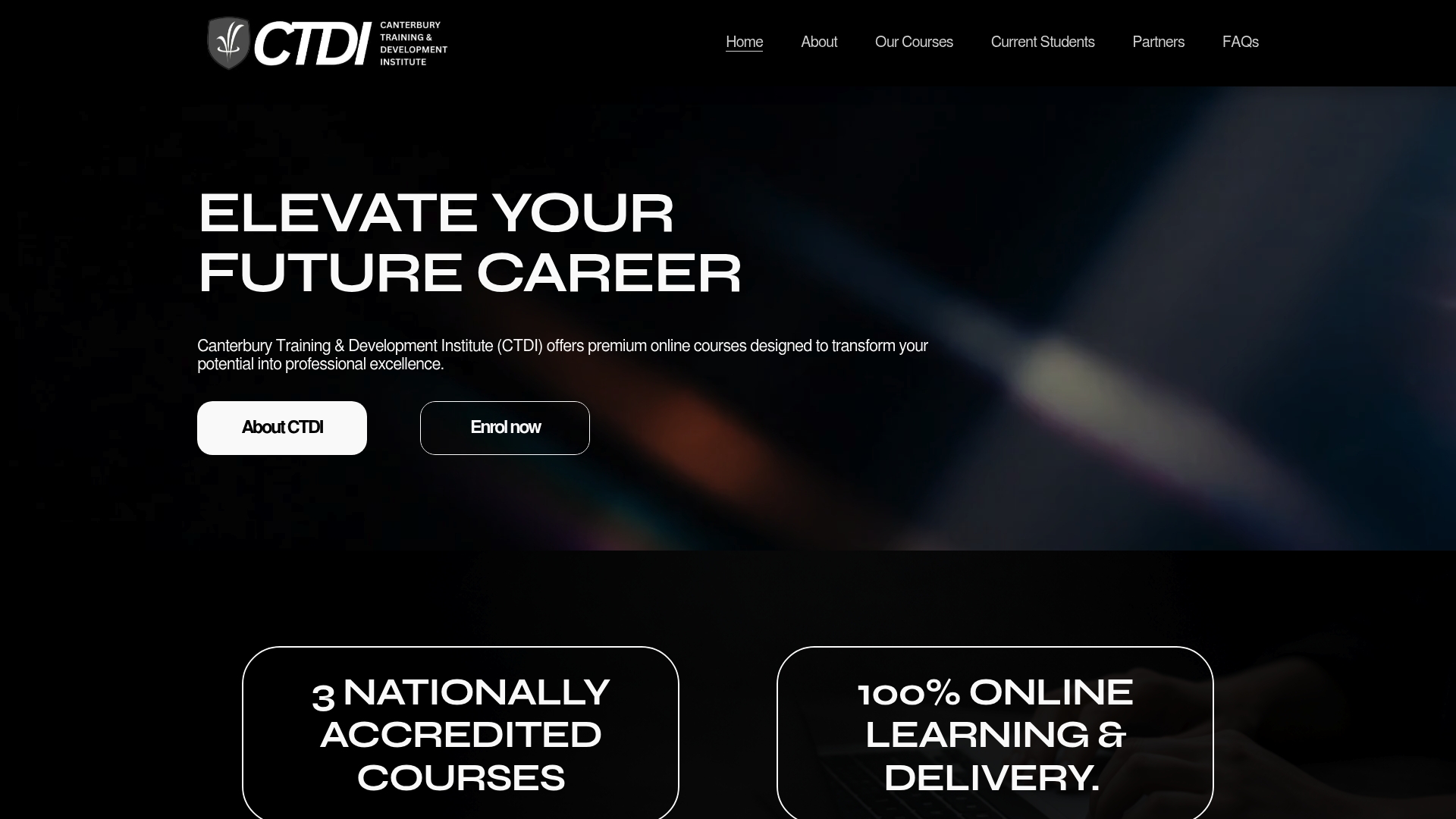
Once you've verified a provider's scope and satisfied yourself on the checks above, the next question is simply whether the course fits your goals and your schedule. CTDI's courses are built around three of the priority areas covered in this guide: the Diploma of Artificial Intelligence, the Advanced Diploma of Digital Marketing, and the Certificate IV in Environment Sustainable Management, all delivered 100% online and self-paced so you can study around work or family commitments.
- CTDI courses are supported by student support staff throughout your study.
- If you have relevant work experience or prior study, CTDI can guide you through a recognition of prior learning assessment to see whether it applies to your course.
- Before enrolling anywhere, including with CTDI, confirm the current scope on training.gov.au and read the course page in full.
If one of these three areas matches your career direction, the practical next step is to review the course page, check the qualification's scope yourself, and either contact CTDI's enrolments team or enrol now, which involves a one-off enrolment fee.
Sources
- Training
- Current fees & charges | ASQA
- Productivity Commission report on vocational education and training
FAQ
Are RTOs profitable businesses to run?
Profitability varies widely by provider size, specialisation and funding mix, and sector reviews note that private RTOs competing alongside TAFE often depend on a combination of fee-for-service and subsidised funding to remain sustainable. There's no single published profitability figure for the sector as a whole, so treat any specific claim about RTO margins with caution.
What are the best online learning platforms in Australia?
Rather than a single "best" platform, look for a registered training organisation whose scope on training.gov.au matches the qualification you want and whose delivery mode suits your schedule. CTDI is one option for learners wanting 100% online, self-paced VET courses in areas like artificial intelligence, digital marketing and environmental management.
How much does it cost to set up an RTO in Australia?
Setup costs include ASQA's initial registration and assessment fees, plus an Annual Registration Charge that varies depending on scope size and CRICOS status. Beyond regulatory fees, applicants also need to demonstrate financial viability and have qualified staff and resources in place before registration is granted.
Has ASQA cancelled any RTO qualifications recently?
Yes, ASQA has the power to cancel qualifications and an RTO's registration where it finds serious non-compliance, and it has done so in specific cases, including a 2025 decision affecting Christa College. Students affected by a cancellation typically need to pursue RPL with another registered provider or seek teach-out guidance.
Recommended
- Shortlist 2–3 RTOs: VET Course Checklist for Working Adults
- 6 Quick RTO Checks for Adults Choosing Training Providers in Australia
- Vocational training in Australia: how to find accredited courses
- Up to 50% Credit: Paperwork Checklist for VET Graduates in Australia
This article provides general information only. Course requirements, study pathways, credit arrangements and career outcomes may vary. Always confirm current requirements with the relevant education provider or authority.