

TL;DR:
- Research shows that online learning's effectiveness depends on student engagement rather than the mode of delivery. Quality online vocational programs offer flexibility, current industry content, and nationally recognized credentials suitable for working learners. The key to success lies in course design, active trainer involvement, and fostering motivation and persistence throughout the journey.
Online learning has a reputation problem. Many prospective students assume studying remotely means settling for something less rigorous than sitting in a classroom. That assumption is wrong, and the research is unambiguous about it. A Springer Nature study found that student engagement, not the learning modality itself, determined online success. This article unpacks what that means for you practically, covering personalisation, career impact, engagement and support, and the self-motivation strategies that separate graduates who thrive from those who stall. Whether you are eyeing a move into AI, digital marketing, or environmental management, the evidence points in one clear direction.
Table of Contents
- How online learning empowers career-focused students
- Is online learning as effective as in-person study?
- Engagement and motivation: The critical ingredients for success
- Online learning for lifelong career development
- Why the real question is 'which online course design fits you?'
- Find flexible online courses to fit your career path
- Frequently asked questions
Key Takeaways
| Point | Details |
|---|---|
| Flexibility for careers | Online learning lets you fit study around work and upskill in fast-moving industries. |
| Engagement drives success | Active participation and supportive course design are crucial for strong outcomes, not just the learning format. |
| Recognised and stackable | Quality online qualifications are now designed to meet industry needs and support ongoing credential building. |
| Motivation matters | Personal drive and structured support help you stay on track in self-paced online courses. |
How online learning empowers career-focused students
The first thing to understand about online vocational study is that it was built for people with competing priorities. You are not a full-time student fresh out of secondary school with nothing else on your plate. You are probably already working, possibly managing family responsibilities, and trying to carve out time to build skills that actually matter in the job market. Online learning is designed precisely for that reality.
The core advantage is schedule control. Unlike a lecture timetable carved into stone each semester, online courses let you study at 6 a.m. before the workday starts, or at 10 p.m. after the kids are asleep. You are not locked into a single pace. If a particular module clicks quickly, you move on. If you need to revisit something, nothing stops you. This modular structure is one of the defining features of quality online vocational programmes, and it matters enormously when you are balancing study with a job.
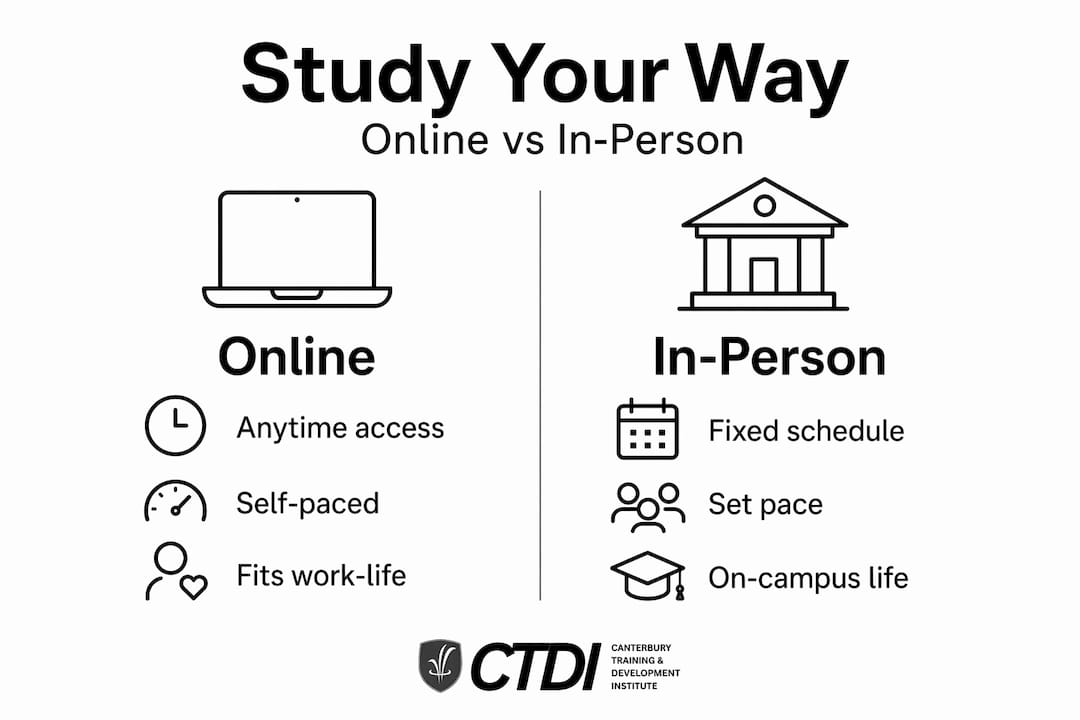
The OECD Skills Outlook 2025 highlights online learning as vital for workforce upskilling and lifelong learning, noting that it opens access to credentials that workers could not previously obtain while remaining employed. That is a significant policy endorsement, not marketing language. Governments and employers are taking notice of the role online training plays in keeping workforces current and competitive.
Fields like AI, digital marketing, and environmental management are changing faster than most universities can update their printed course guides. Online vocational programmes are built with that speed in mind. Content is updated more frequently, case studies are drawn from current industry practice, and assessments are aligned with what employers are actually looking for right now.
"Online learning has become a cornerstone of workforce development. Its ability to deliver credentials flexibly and modularly is central to preparing workers for 21st-century careers." — OECD Skills Outlook 2025
Understanding how online education empowers vocational students means seeing it not as a compromise but as a deliberate choice for career advancement. The pathways it creates are practical and stackable, meaning one certificate can lead to a diploma, which can lead to an advanced diploma, each building directly on the last.
Top three reasons students choose online vocational learning:
- Flexibility without sacrifice. You can study around existing work and life commitments without putting your income or family on hold.
- Industry-aligned content. Courses in fast-moving fields like AI and sustainability are built by practitioners, not solely by academics removed from current industry conditions.
- Credential portability. Nationally recognised qualifications earned online carry the same weight with employers as those earned on campus.
Thinking about career growth through online learning is not wishful thinking. It is the practical logic behind why hundreds of thousands of Australians are choosing this pathway each year.
Pro Tip: Before enrolling, check the course delivery format carefully. Some programmes labelled "online" still require set attendance times for webinars or tutorials. Make sure the flexibility offered actually matches your schedule, not just a theoretical version of it.
Is online learning as effective as in-person study?
This is the question that sits at the back of every prospective student's mind. And it is a fair one. You are investing real time and real money, and you want to know the return is genuine.
The short answer: yes, online and in-person study can be equally effective. The longer answer involves understanding what actually drives that effectiveness.
A Springer Nature study on hybrid learning found no significant direct effect of modality on exam results when engagement was present. Put plainly, whether you sat in a lecture theatre or logged into a learning platform mattered far less than whether you were actively engaged with the material and supported by your instructor. That is a counter-intuitive finding for many people, but it holds up across multiple research contexts.
The same research found that online feedback had a strong positive effect on student learning, with a meta-analysis effect size of g = 0.929. To put that number in perspective, an effect size above 0.8 is considered large in educational research. That means well-delivered online feedback was not just "as good as" in-person feedback. It produced large, measurable improvements in learning outcomes.
| Factor | Online vocational learning | In-person vocational learning |
|---|---|---|
| Scheduling | Fully flexible, self-directed | Fixed timetable, location-dependent |
| Feedback quality | High when platforms are well-designed | Variable, depends on class size |
| Engagement | Driven by course design and student motivation | Driven by social presence and routine |
| Content currency | Updated more frequently by practitioners | May lag behind industry changes |
| Access for remote learners | Fully accessible | Requires commute or relocation |
| Credential recognition | Nationally recognised | Nationally recognised |
| Cost | Generally lower, no travel costs | Higher total cost with commuting |
The table above makes clear that neither modality is universally superior. The differences lie in the conditions each creates for learning, not in some inherent quality gap between sitting in a room and studying on a screen.
Expert trainers in online education are a major variable in this equation. When a course is designed and delivered by practitioners who work in the relevant industry, the quality of feedback and the relevance of examples are markedly higher than in a generalist classroom setting.
Key conditions for successful online learning outcomes:
- Active instructor presence throughout the course, not just in recorded introductory videos
- Timely, specific feedback on assessments rather than generic comments
- Clear course structure with logical progression between modules
- Opportunities for peer interaction or industry engagement
- Technical support that removes barriers to access
Understanding these conditions helps you evaluate courses before you commit. Ask prospective providers how their trainers engage with students between assessments, and how quickly you can expect feedback on submitted work.
Engagement and motivation: The critical ingredients for success
Here is where most online learning conversations go shallow. People talk about flexibility and convenience, which are real advantages, but skip over the harder question: what keeps you going when no one is checking on you?
Motivation in online study is not a fixed quantity you either have or lack. It is something that course design actively supports or undermines. A poorly structured programme can drain the motivation of even the most disciplined learner. A well-designed one can carry a reluctant student through material they initially found daunting.
Research is direct on this point. Persistence, engagement, and well-designed support are essential. Self-paced courses with weak structure risk higher dropout rates. That is not a judgement on students' willpower. It is a design failure. When a course lacks clear milestones, meaningful interaction, or timely feedback, even motivated students drift.
"Engagement and persistence in online learning are not personality traits — they are outcomes of course design. Programmes that build in structure, feedback, and community dramatically outperform those that do not." — Springer Nature, 2025
This insight should change how you shop for courses. You are not just looking for a subject that interests you. You are looking for a learning environment that will sustain your engagement through the full qualification.
Your expert trainers are not just knowledge sources. They are engagement anchors. A trainer who responds to forum posts, provides rich feedback on assessments, and offers worked examples drawn from real industry experience keeps students returning to the material with genuine curiosity rather than obligation.
Three strategies to build persistence and engagement in online study:
-
Set non-negotiable study blocks. Treat your study time like a meeting with your future employer. Put it in your calendar, give it a fixed location in your week, and protect it from interruptions. Consistency is more powerful than long, irregular study sessions.
-
Engage actively with assessments rather than just submitting them. When you receive feedback, revisit the relevant module, note what you missed, and write a brief summary of the corrected understanding. This creates the retrieval practice that turns short-term completion into long-term knowledge.
-
Join or form a peer group. Even in a self-paced programme, connecting with other students through forums, social media groups, or video calls creates accountability and reduces the isolation that is one of online learning's genuine risks. Many students find that explaining a concept to a peer cements their own understanding more effectively than any additional reading.
Pro Tip: Before enrolling, ask the provider specifically about instructor response times and the frequency of feedback on assessments. If the answer is vague or the feedback cycle is longer than one week, that is a red flag for engagement quality.
Online learning for lifelong career development
The idea of a single, linear career pathway is becoming less relevant every year. People entering AI, digital marketing, or environmental management today will need to update their skills repeatedly across their working lives. The question is not whether you will need to reskill. It is whether your approach to learning can keep up with that need.
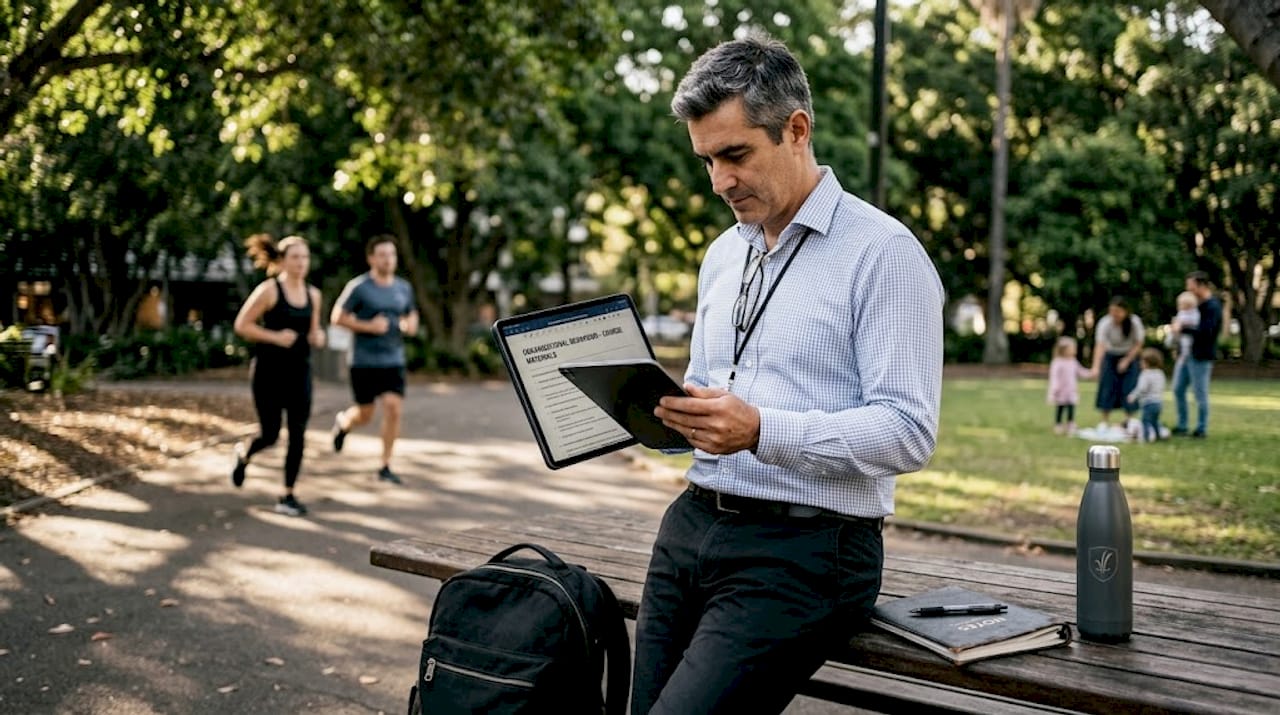
Online learning is structurally better suited to ongoing career development than traditional full-time study. You do not need to leave work, relocate, or commit to a multi-year programme that locks you in. Stackable qualifications and modular skills updates are exactly what the OECD identifies as critical for workforce participation in rapidly changing economies.
The evidence for knowledge gain from quality online study is strong too. A study of 1,546 students showed significant knowledge gain and self-reported benefit from quality online courses, regardless of the students' starting knowledge level. That is important: you do not need to be an expert to benefit substantially from well-delivered online vocational training.
| Career area | Online pathway | Credential type | Typical career outcome |
|---|---|---|---|
| Artificial intelligence | AI fundamentals to applied AI | Certificate to diploma | AI operations, data analysis, prompt engineering |
| Digital marketing | Marketing fundamentals to advanced strategy | Certificate IV to advanced diploma | Digital strategist, campaign manager, SEO specialist |
| Environmental management | Sustainability basics to management | Certificate IV to diploma | Sustainability coordinator, compliance officer |
The pathways above are not theoretical. They represent the progression that working professionals are actively taking through online vocational training in Australia right now.
Consider a few realistic scenarios. A customer service professional with no formal marketing background completes a Certificate IV in digital marketing online over twelve months while keeping their current job. They apply for a junior digital coordinator role, land it, and within two years are managing campaigns independently. Or a facilities manager completes a Certificate IV in environmental sustainability to move into a dedicated sustainability role as their employer ramps up ESG reporting requirements. Or a mid-career IT professional completes a diploma in AI to position themselves for the growing demand for AI implementation roles across Australian industry.
Understanding flexible education for career growth means recognising that the barrier to these transitions is lower than most people think. A nationally recognised vocational qualification, completed online in twelve to eighteen months, is often all that separates someone from a meaningful career step up.
Real-world vocational outcomes from online study:
- A project coordinator moves into a digital marketing manager role after completing an advanced diploma online, gaining practical campaign experience through assessment projects
- An environmental compliance officer completes further online training in sustainability management and is promoted to lead a corporate ESG programme
- A small business owner completes an AI fundamentals course online and implements automation tools that reduce their administration time by several hours per week
Thinking about professional development through this lens makes it concrete. Each qualification is not just a piece of paper. It is a demonstrated capability in an area your employer or a future employer cares about.
Why the real question is 'which online course design fits you?'
After working with vocational learners across a range of industries and experience levels, we have observed something consistently: the students who struggle in online learning rarely fail because the content is too hard. They fail because they chose a programme that did not match their engagement style, their need for structure, or their requirement for human interaction.
The conventional debate about "online versus in-person" is mostly the wrong conversation. The right question is: what does this specific online programme do to support my learning, and does that match how I actually work?
Programmes vary enormously in this regard. Some are genuinely self-directed, meaning you receive content and submit assessments but have minimal contact with trainers or peers. These can work brilliantly for highly autonomous learners with strong prior knowledge in a field. For most people making a significant career change, they are a risky choice.
The programmes that consistently produce strong outcomes share a few characteristics. They build teaching presence into the course, meaning trainers are visibly engaged, not just names on an introductory video. They provide well-timed, specific feedback rather than generic marks. They create structured interaction points, whether through discussion forums, live Q&A sessions, or group assessments. And they offer clear guidance on pacing so students are not left wondering whether they are on track.
This is where the "purely self-directed" model often falls short, even for motivated students. Self-direction without scaffolding is not freedom. It is ambiguity. And ambiguity is the enemy of persistence.
Our honest observation, drawn from real experience supporting students through vocational programmes, is that many enrolment decisions are made based on the content catalogue rather than the learning environment. Students look at the subject outline, see topics they care about, and sign up. They do not ask how the programme handles the moment three weeks in when motivation dips and the next assessment feels overwhelming. That moment will come. What matters is whether the programme is designed to meet you there.
Before you enrol anywhere, ask recent graduates about their experience specifically around feedback quality and trainer responsiveness. Ask the provider how many touch-points students have with trainers per month. Ask whether there is a community of learners you can interact with. These questions will tell you more about your likely outcome than the course brochure ever will.
Understanding skills and career gains is not just about picking the right subject. It is about picking a programme that is actively invested in getting you across the line.
Find flexible online courses to fit your career path
The research is settled and the pathways are clear. Quality online vocational study, delivered with genuine engagement and expert trainer support, produces real career outcomes in AI, digital marketing, environmental management, and beyond. The next step is finding a programme that is built around your goals, not just your schedule.
At CTDI, our courses are designed by industry practitioners and delivered with the engagement and feedback structures that research shows actually drive results. Whether you are ready to enrol in online diplomas now or want to explore specific pathways first, we have options built for working professionals. Take a closer look at the advanced diploma of digital marketing if you are building a career in digital strategy, or explore the certificate IV environmental sustainability if you are moving into the growing sustainability and compliance sector. Your next career step is closer than you think.
Frequently asked questions
Are online qualifications credible to employers in 2026?
Yes, employer acceptance grows steadily as online vocational courses are increasingly aligned with industry needs. Credential and skills updating through online pathways is now recognised by the OECD as central to workforce readiness, and nationally recognised qualifications earned online carry the same standing as campus-based equivalents.
What fields are best suited to online vocational study?
Fields like AI, digital marketing, and environmental management top the list for online study due to their rapid pace of change and high skills demand. Online learning enables credentials and skills updates particularly well for fast-evolving areas where content must reflect current industry practice.
Is online learning effective for hands-on vocational skills?
Yes, with quality materials and engaged delivery it absolutely is. A study of 1,546 students showed measurable knowledge gains and self-reported benefits regardless of starting knowledge level, confirming that well-designed online courses produce genuine skill development.
What are common reasons students struggle in online courses?
Dropout and poor performance are most often linked to weak engagement, lack of programme structure, or declining motivation, not the online format itself. Persistence and engagement are crucial; programmes with weak structure actively increase the risk of students disengaging before they complete.